Yhwach is dead, the three worlds are still standing, and ten years later Ichigo and Orihime are raising a son. That reads like a clean victory. Then Kazui Kurosaki reaches into a black opening, a surge of Yhwach’s spiritual pressure vanishes, and the story stops explaining itself. Here is the Bleach TYBW ending explained in one line: Ichigo wins the war and protects a world where people still choose, fear and love, but the structure holding that world together is more troubling than the final chapter admits.
This piece asks whether Ichigo saved the world or preserved a system that may face another crisis. Spoilers follow for the manga, the anime finale (episode 50, “DEATH & STRAWBERRY,” aired October 26, 2026) and the companion novels.
Bleach TYBW Ending Explained: How Yhwach Actually Falls
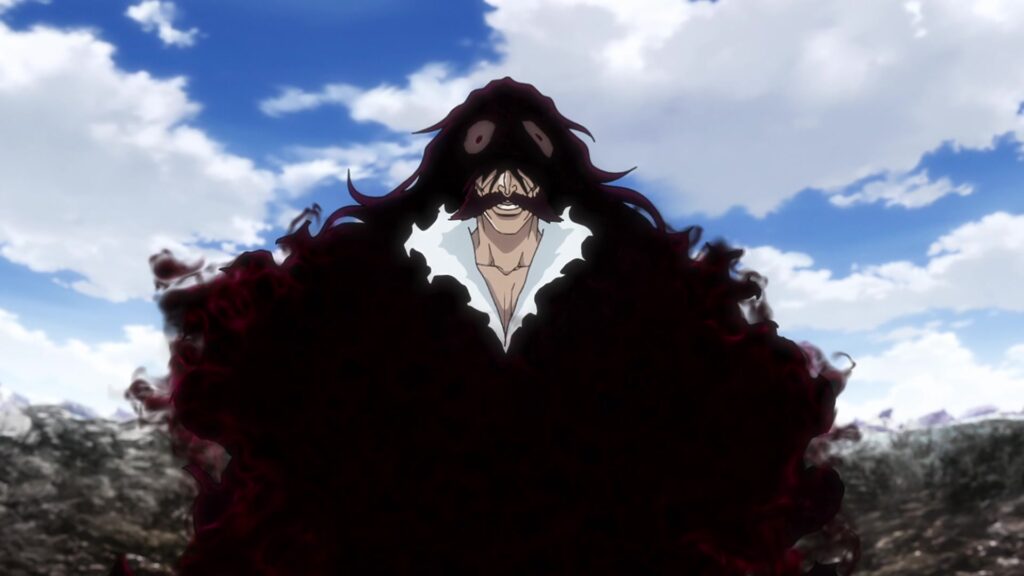
Yhwach’s Almighty does more than predict what happens next. It lets him perceive possible futures and interfere with them, including futures where he dies, so a fatal strike alone cannot finish him.
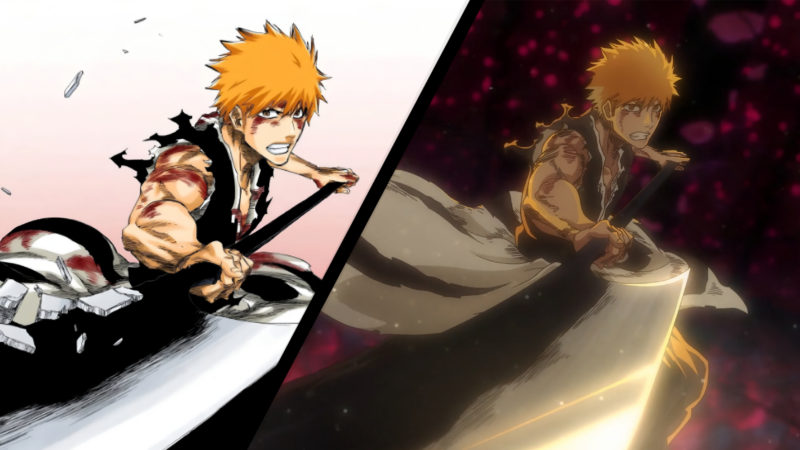
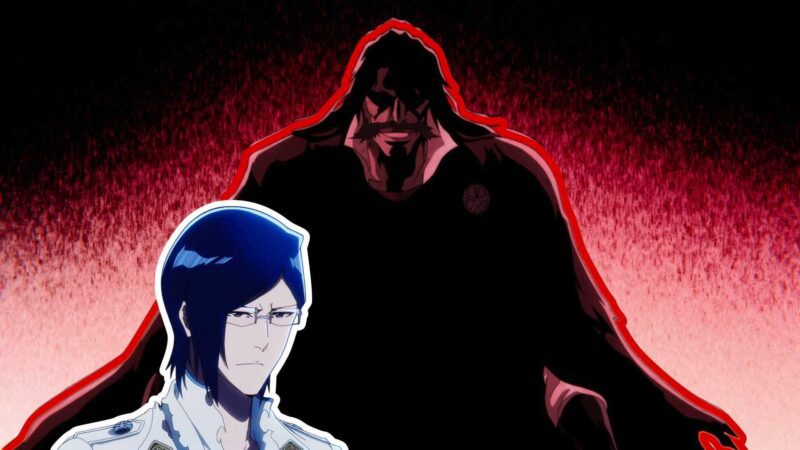
In manga chapters 683 and 684, Aizen uses Kyōka Suigetsu to manipulate Yhwach’s perception and open a window for Ichigo. Yhwach still survives the apparent killing blow by altering the future. The turn comes when Uryū fires the Still Silver arrowhead, made from silver associated with Quincies killed through Auswählen. The arrow temporarily interrupts Yhwach’s powers, and Ichigo’s Zangetsu ends his attempt to merge the worlds. The win comes from removing the advantage that made Yhwach unbeatable, not from overpowering him.
The 2026 anime widens the lens. Episode 49, “THE BLADE,” has Yhwach manifest in Soul Society, the Human World and Hueco Mundo at once, with different factions resisting him in each. Grimmjow, Harribel, Nelliel and several Gotei 13 captains join in, Shunsui among them, though Ichigo still delivers the finishing slash.
The manga gives us a handful of people beating an almost invincible enemy; the anime gives us the inhabitants of three worlds defending the existence Yhwach meant to erase. In an interview published by Hypebeast on October 26, 2026, Kubo said he wanted the anime to include developments he had previously omitted or lacked the chance to depict, which makes the added material an author supervised interpretation of the ending rather than something to dismiss as filler.
A World Without Death Against a World That Needs Courage
Yhwach’s goal is specific. He wants to remove the boundaries between life and death, believing that if death stops being an endpoint, people no longer need to fear it. From his side, defeat condemns souls to keep suffering through loss and mortality.
Aizen’s reflection in chapter 686 answers him. People move forward because they face fear and uncertainty, and without death and the possibility of loss the courage to keep living loses its meaning. The anime’s final special ending movie reinforces the idea with imagery involving the words BRAVE and despair. The disagreement is philosophical rather than a contest of strength: Ichigo does not prove that suffering is good, he protects a world where people keep the ability to choose, love and struggle despite it. That is a defence of choice, not of the system built around it, and the system is where the cost appears.
The Price of the Peace: A New Soul King
The original Soul King, Reio, was the foundation that kept the Human World, Soul Society and Hueco Mundo separate. Those realms were once part of a unified existence, and the Soul King was the linchpin of the divided arrangement. Yhwach absorbed that power, which is why his death threatened the structure itself.
Chapter 686 never explains why the worlds survive. The companion novel storyline does, including Can’t Fear Your Own World (three novels by Ryohgo Narita based on Kubo’s concept and input, published in English by VIZ) and WE DO knot ALWAYS LOVE YOU (by Makoto Matsubara, with Kubo credited for the original concept and illustrations). Soul Society uses Yhwach’s defeated remains as the new linchpin. The arrangement is tied to Ichibē Hyōsube, and it is possible because Yhwach had absorbed the previous Soul King’s power. These are novels rather than chapters by Kubo, so this is supplementary lore, not something the manga states outright.
On one reading, Soul Society keeps existence going by replacing one immobilised, exploited figure with another. The enemy who tried to overthrow the order becomes part of it. That is a defensible interpretation of the novels’ revelations, not a claim that every Soul Reaper approves, but it changes what the victory means: the old structure carries on rather than being reformed.
Ten Years Later: What Kazui Does and Does Not Explain
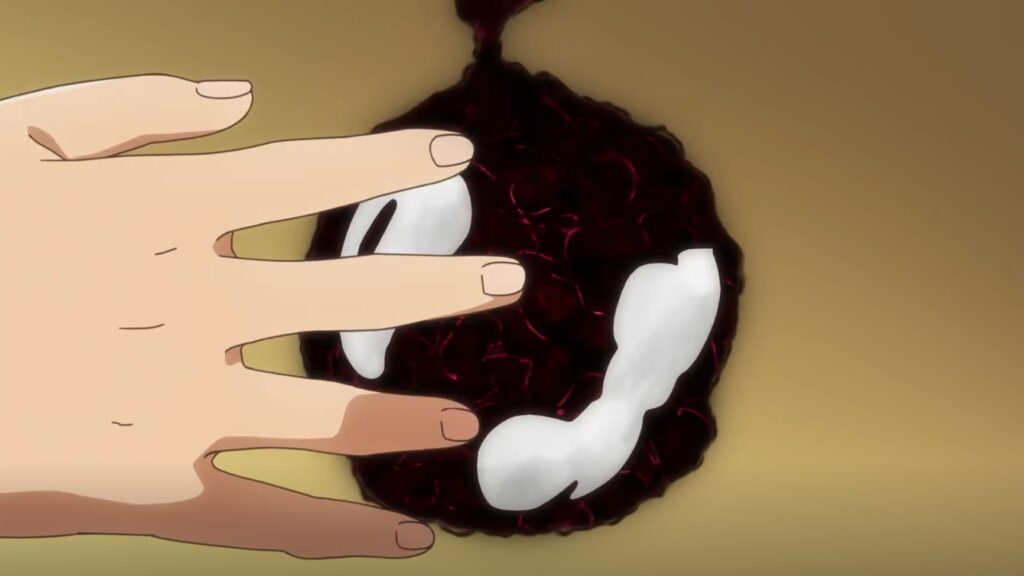
Ten years on, Soul Society detects a disturbance tied to Yhwach’s spiritual pressure, and Byakuya, Mayuri and other Soul Reapers investigate as it begins to manifest in the rebuilt Seireitei. In the Human World, Kazui finds a strange black opening carrying similar energy and puts his hand into it. The manifestation disappears, and so does the threat in Soul Society.
That is where the confirmed material ends. The story does not explain how it happened, and it does not show Kazui defeating a revived Yhwach, outranking Ichigo, absorbing Yhwach’s power or breaking a seal on Hell. Those remain unconfirmed theories. A reasonable reading connects the episode to Yhwach’s threat, made in his last confrontation with Ichigo, to take away the happiness of Ichigo and his loved ones when they feel most secure, but whether his lingering power could have restored him is never addressed.
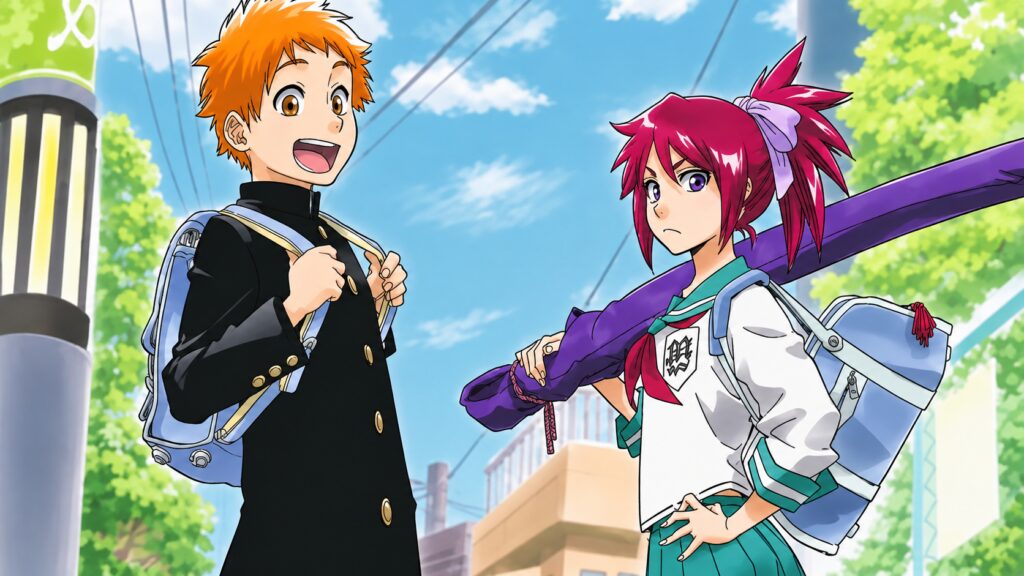
The scene was not an improvisation. Kubo told Hypebeast he planned the ending very early: the story opens with Ichigo meeting Rukia and closes with their children meeting, the conclusion involving Kazui and Ichika. Episode 50 draws the line by reanimating Ichigo and Rukia’s first meeting.
Hell and the Problem Nobody Solved
The 2021 special one shot, published by Kubo on August 9, 2021 and listed by VIZ as an official special, is set 12 years after the war. It reveals what Konsō Reisai, the ceremony for deceased captains, quietly does: spiritual matter from extremely powerful Soul Reapers is too dense to return naturally to Soul Society, so the ceremony sends them to Hell. Yamamoto, Unohana and Ukitake are implicated.
The returning Szayelaporro Granz explains why Hell is stirring. Beings as powerful as Aizen and Yhwach had helped keep Hell from exerting influence over the other realms. After Yhwach’s defeat and Aizen’s removal from active events, that balance changes, and the accumulating spiritual pressure of departed captains adds to an imbalance that lets entities from Hell emerge. Yhwach’s defeat therefore contributed to the conditions without being the only cause.
Kazui’s link to all this is suggested but unexplained. He brings the spirit of a dead man to a small shrine, performs a ritual and opens a portal lined with teeth. When a skeletal figure tied to the Gates of Hell notices him, he responds cheerfully. That sets him against Yhwach, who spent the war trying to control the future, though this contrast is a thematic reading, not something Kubo has stated. As of November 7, 2026, no full Hell Arc has been announced for manga or anime. BLEACH FES. on February 27 and 28, 2027 and the BLEACH EX. II exhibition in summer 2027 are officially announced, but neither is evidence of one.
So Did Ichigo Save the World?
Yes, in the way the story defines saving. The war ends, the three worlds continue, and Aizen’s argument about courage and uncertainty is the one the ending backs. The cost is a peace resting on arrangements that were kept rather than reformed: a new linchpin made from the defeated enemy, and a funeral ceremony that contributes to the imbalance the one shot describes. Calling the world doomed to another crisis goes further than the evidence does, since no Hell Arc has been confirmed. What the ending does show is that ending the war and fixing the world’s rules were never the same victory.