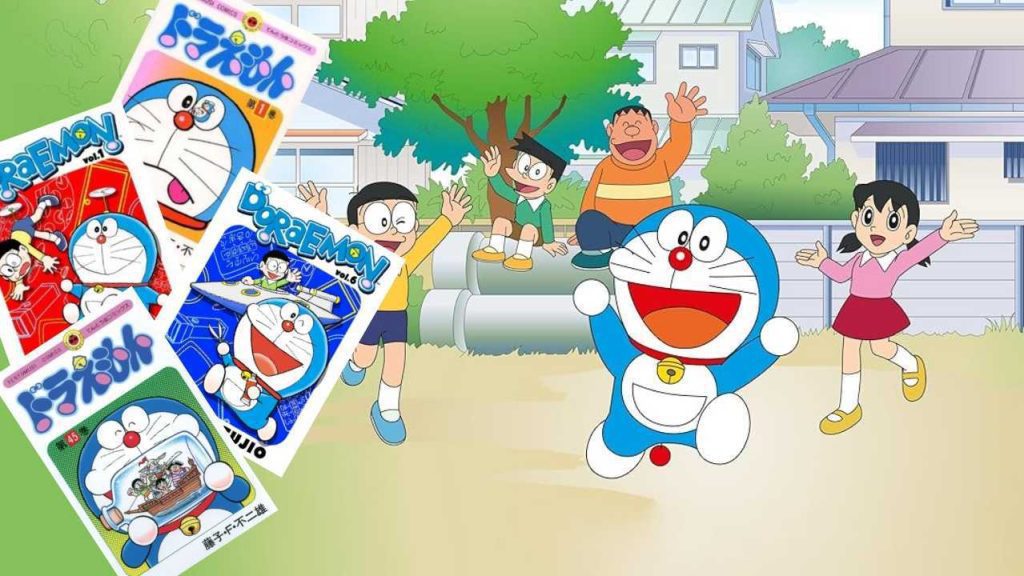
On April 15, 2026, Monthly CoroCoro Comic published its May issue. Tucked inside was the final installment of a reprint series that had run quietly for nearly a quarter century. The anime internet responded the way it usually does: with a clean, dramatic number. Doraemon’s 49-year run in CoroCoro is over. That headline travels well. It just is not the full picture.
The Magazine That Was Born for Doraemon Manga
The Doraemon manga’s relationship with CoroCoro Comic is one of the more unusual origin stories in publishing. Shogakukan launched CoroCoro in 1977 not as a general manga magazine but as a vehicle for consolidating Doraemon chapters that had been scattered across six different grade-level publications. The inaugural issue carried 200 pages of Doraemon content, and Shogakukan’s own documentation describes the magazine as born to give readers a place to read plenty of Doraemon. The franchise was not just featured in CoroCoro. It was the reason CoroCoro existed.
Creator Fujiko F. Fujio (real name Hiroshi Fujimoto) wrote original chapters for this run until his death on September 23, 1996. The original Doraemon manga had formally concluded months earlier: the 45th tankōbon volume was published on April 26, 1996, with Fujiko’s final chapter, “The Man from Planet Galapa,” collected within it. After his passing, CoroCoro ran no Doraemon serialization at all. That gap lasted roughly six to seven years, which is exactly where the 49-year claim starts to fall apart.
What the “49-Year Streak” Gets Wrong
The reprint series that just ended, formally titled Fujiko F. Fujio Masterpiece Theater: Doraemon (藤子・F・不二雄名作劇場ドラえもん), launched in the April 2002 issue as part of CoroCoro’s 25th anniversary celebration, as confirmed by Comic Natalie and multiple Japanese sources. It ran continuously until the May 2026 issue. That is 24 years. Before that, the original serialization covered roughly 18 years, from 1977 to 1995. Between those two runs sat a confirmed gap: according to a Japanese collector who tracked individual CoroCoro issues, the reprint temporarily ended in the August 1995 issue and did not restart until April 2002.
The actual picture is roughly 42 years of Doraemon manga content across 49 years of magazine history. Not an unbroken streak. A two-act run with an intermission.
The final reprinted chapter was “Toki de Nagai Ichinichi” (時門で長~~い一日), translated as “A Loooooong Day with the Time Gate,” sourced from Volume 31 of the original Tentomushi Comics edition, as confirmed by Comic Natalie and the Doraemon fandom wiki. As final chapters go, it is a quietly appropriate choice: no grand farewell, just a story about time, from a franchise built around a time-traveling blue robot.
What Actually Ended the Run
What triggered the end is where the story gets genuinely complicated, and it is worth being specific about what is confirmed and what is not.
The confirmed sequence: the February 2026 issue (released January 15) and the April 2026 issue (released March 13) of CoroCoro both published the exact same reprinted chapter. Shogakukan confirmed this publicly and issued a formal apology on March 17, 2026, describing it as an operational error by the editorial department. That apology is on the record.
What happened next inside the relationship between Shogakukan and Fujiko Pro, the estate managing Fujiko F. Fujio’s intellectual property, is contested. Claims about representatives walking out of the apology meeting, senior staff being suspended, and the partnership dissolving in anger spread widely online. These details originate from posts on X (Twitter) by Takeshi Yamanaka, a freelance writer and former editor-in-chief of Weekly Gendai. Toy-People, the outlet that first covered the controversy in English, explicitly stated that the following details came from Yamanaka’s claims and had not been confirmed by Shogakukan or Fujiko Pro. That caveat got dropped as the story spread.
The items confirmed independently by multiple outlets: the duplicate chapter, the formal apology, the end of the CoroCoro serialization, and the removal of “Serialized in: CoroCoro Comic” from the Doraemon anime’s opening credits starting with episodes aired after May 16, 2026, as reported by Comic Natalie and Vietnamese outlet Tuoi Tre on May 18, 2026. Previously, the opening credits listed three Shogakukan magazines. After May 16, only two remained. Everything beyond those confirmed facts is still speculation with a named source attached. That is not the same thing as established reporting.
The Doraemon Manga Is Not Ending. CoroCoro Is Losing It.
The distinction matters. The 2005 Doraemon anime reboot airs on TV Asahi and is still running as of 2026. The franchise’s 45th theatrical film, released in February 2026, held the number one position at the Japanese box office for six consecutive weekends, according to box office tracking cited in multiple entertainment reports. The Doraemon manga continues its reprint presence in Shogaku Ichinensei, Televi-Kun, Yochien, and CoroCoro Ichiban. The franchise has not lost its footing. CoroCoro has lost the franchise.
For readers who grew up with CoroCoro as the default home for Doraemon manga, that distinction might feel semantic. For the publishing industry, it is concrete. A magazine that was literally created to house a single manga no longer carries that manga. Whether CoroCoro can define what it is without Doraemon is a genuinely open question, and one no other title on its roster seems positioned to answer.
Our Take
The 49 year headline is going to win. It is cleaner, more dramatic, and easier to share. But the real story is smaller and somehow more remarkable than a round number. An editorial mistake so avoidable that two consecutive issues of one of Japan’s oldest manga magazines published the same chapter, nobody caught it before print, and the fallout ended a 24 year institutional relationship. One duplicated chapter. That is what this is. And the Doraemon manga did not end. It moved. Which, for a franchise built on a gadget called the Anywhere Door, feels about right.
Did the Doraemon franchise end in 2026?
No. The global franchise remains fully active with ongoing anime episodes and annual movies.
What actually concluded after 24 years?
Only a specific monthly reprint column inside Monthly CoroCoro Comic magazine.
Why is this event considered historically significant?
It is the first time in the magazine’s 49-year history that an issue does not include a Doraemon manga feature.
Is there a confirmed corporate scandal behind the ending?
No. Official records point to a quiet, natural conclusion of a long-running commemorative project.
Sources: Comic Natalie, Oricon, Mainichi Shimbun, Toy-People, Doraemon fandom wiki, Tuoi Tre