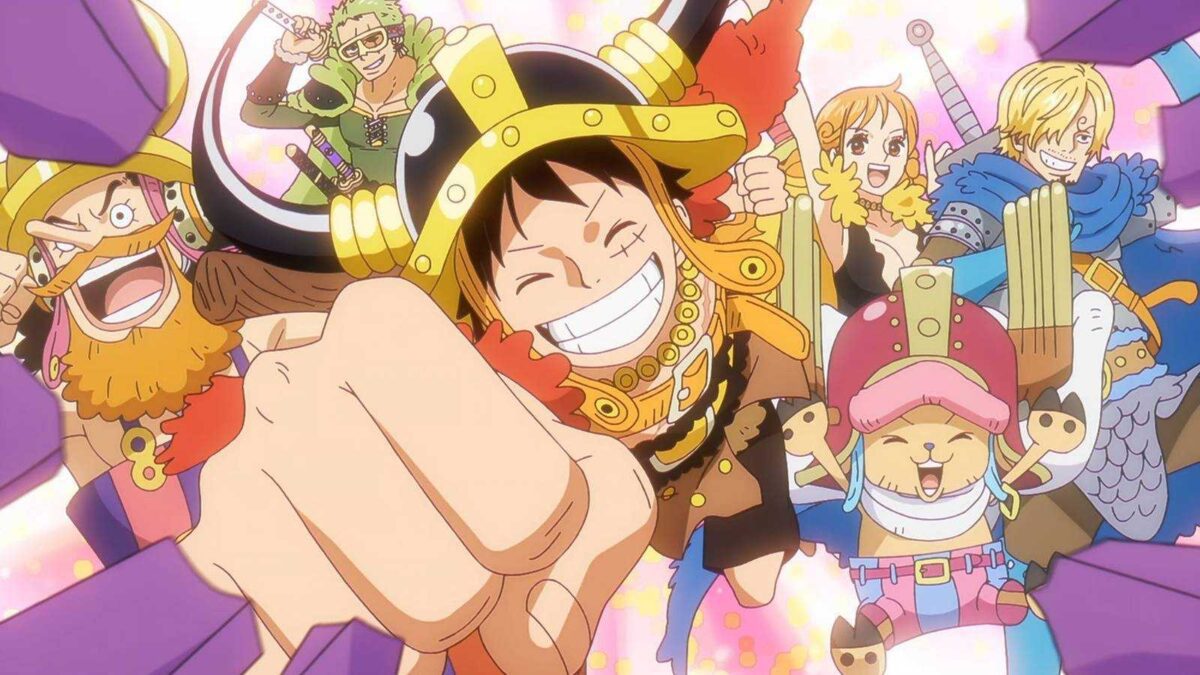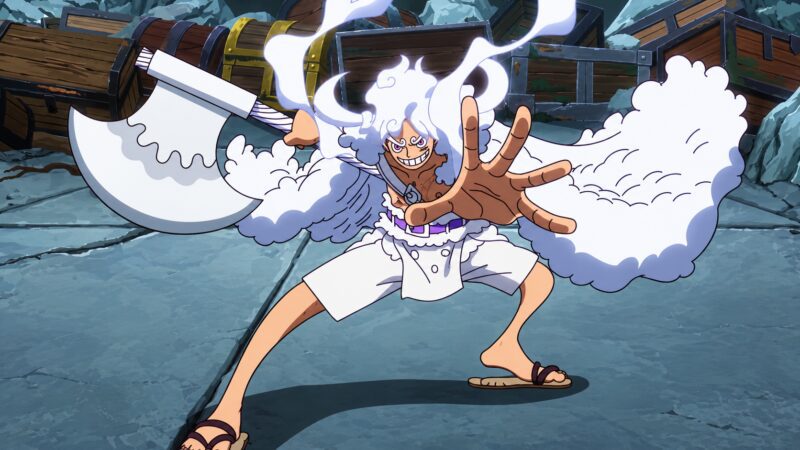

Anime has a rare ability to make grief feel personal. A well-built story invests you so deeply in its characters that when tragedy strikes, it does not feel like something happening to a fictional person — it feels like something happening to someone you know.
The saddest anime moments are not just scenes with emotional music and tearful faces. The ones that truly break fans are the ones with perfect narrative setup — where the payoff of a death, a loss, or a farewell is earned through hundreds of episodes of investment. These are the moments people remember years later, describe to friends who have never even watched anime, and return to on rewatch fully knowing what is coming — and still cry.
Here are the five saddest anime moments ever, ranked — with the full emotional context each deserves.
5. Kaori’s Death — Your Lie in April
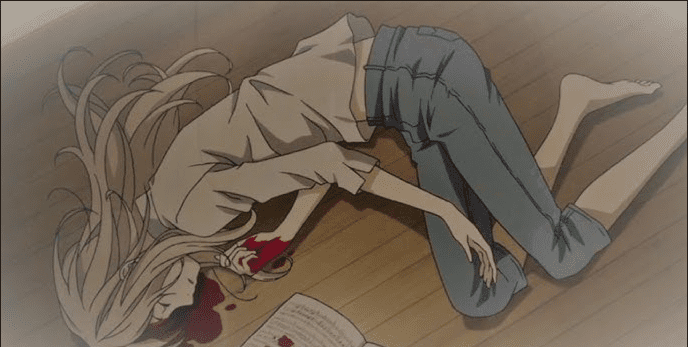
Your Lie in April is a series that announces its tragedy from the very first episode. The question was never whether Kaori Miyazono would die — it was how her death would land, and whether the show had earned it.
It had earned it completely.
Kaori is a violinist who collapses during a performance early in the series, revealing an unspecified terminal illness. Despite everything, she chooses to undergo a dangerous, experimental surgery — her last real chance to buy more time, to play music again alongside the pianist Kousei Arima, who has been paralyzed by trauma since his mother’s death.
The final episode cuts between two simultaneous events: Kaori’s surgery and Kousei’s piano competition performance. As Kousei plays, he imagines her performing beside him — a duet that only exists in his mind, filled with light and overwhelming emotion. The scene builds and builds until her presence begins to fade. The music stops. And the viewer understands what has happened before anything is confirmed.
Afterward, Kousei reads a letter Kaori left him. It reveals the lie she told in April — the one that started everything. She had claimed to love someone else because she was afraid. She had loved Kousei all along. She got close to him by pretending to pursue his best friend because a girl with a terminal illness did not believe she had the right to love someone with a future.
That final revelation reframes the entire series in an instant. Everything she did was an act of love she never allowed herself to name. And by the time he reads it, she is already gone.
The performance. The letter. The truth. Your Lie in April earns every single tear.
4. Eren’s Final Moments — Attack on Titan (Final Season)
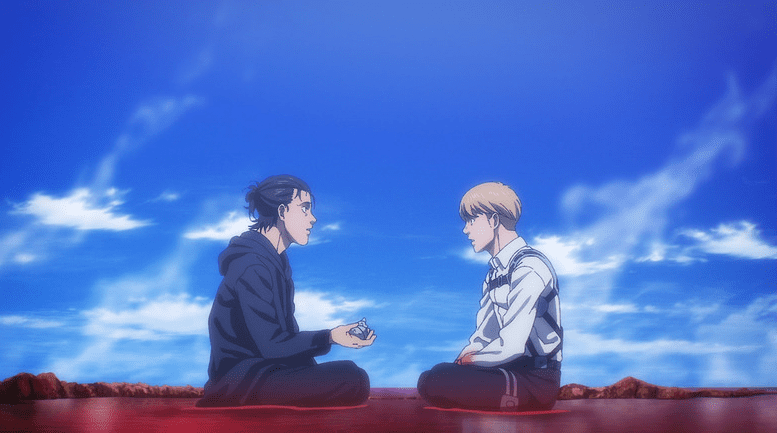
Eren Yeager’s death is one of the most emotionally complex finales in anime history — not because it is simply sad, but because by the end, it is impossible to know exactly how to feel about the person dying.
Eren had become a mass murderer. The Rumbling killed hundreds of thousands of people. He chose it. He caused it. And yet, in his final moments, the show asks the viewer to sit with the human being underneath all of it.
In the Paths — the spiritual dimension connecting all Subjects of Ymir — Eren reaches Mikasa and shows her a vision of the life they never had. Four quiet years together. An ordinary life. A goodbye that the real world would never allow.
When he asks her to forget him and live long, she refuses. And then she kills him. With her own hands, she ends the person she loved most — because she loves the world more.
Before that moment, Eren had private conversations with Armin, Mikasa, and others — admitting in his most vulnerable exchange that he does not want Mikasa to love anyone else and wants to remain in her heart for years after he is gone. The coldness is gone. What remains is a frightened, grief-stricken young man who destroyed the world partly because he could not imagine a version of it without the people he loved surviving.
He is not sympathetic in any clean way. But he is human. And that is what makes his death devastating.
Attack on Titan’s finale is divisive. But Eren’s final moments are not — they are the most emotionally complete thing the series ever produced.
3. Setsuko’s Death — Grave of the Fireflies (1988)
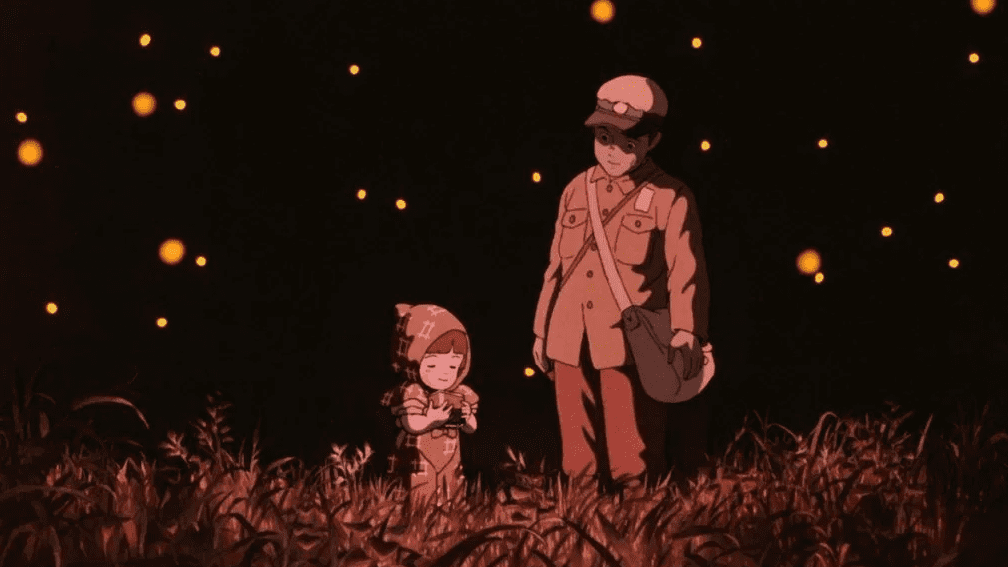
Grave of the Fireflies is not an anime series. It is a 1988 Studio Ghibli film directed by Isao Takahata, and it remains one of the most devastating pieces of animation ever made. Setsuko’s death is its emotional center — and there is nothing in anime quite like it.
The film follows two siblings, Seita and Setsuko, orphaned during the American firebombing of Kobe in World War II. It opens with Seita’s death, then rewinds to show how the two children got there. From the very first minute, the viewer knows where everything is heading. That knowledge makes watching Setsuko’s decline — her gradual starvation, her hallucinations, her shrinking world — almost unbearable.
In her final days, she sucks on marbles believing they are candy. She offers her brother “rice balls” made from mud. She is four years old and her mind is protecting itself from the reality that her body is failing.
When Seita finally breaks down and withdraws their last savings to buy real food — watermelon, eggs, everything she loved — he rushes back to her. She manages one small bite of watermelon. Her last words to him are “thank you.”
She dies in her sleep that night.
Seita later cremates her body and keeps her ashes in the same candy tin they shared throughout the film — the one small object of sweetness in a world that gave them nothing but suffering.
Grave of the Fireflies is not a war film about battles. It is a film about what war does to the children who never had any part in it. Setsuko’s death is not dramatic. It is quiet, inevitable, and completely devastating.
2. Nina Tucker’s Transformation — Fullmetal Alchemist: Brotherhood
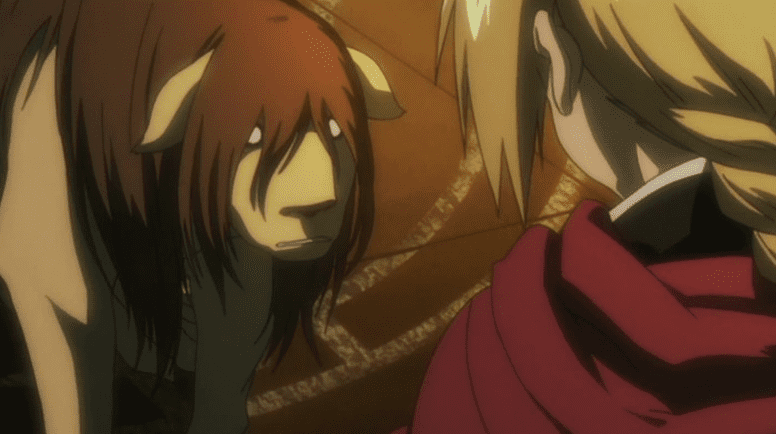
Nina Tucker’s fate is not a death scene in the traditional sense. It is something worse — the moment a story makes you realize that innocence can be erased before it is over.
Shou Tucker is a State Alchemist whose research license is under review. To save his position, he commits an act that remains one of anime’s most genuinely disturbing violations: he fuses his young daughter Nina with their dog Alexander using forbidden alchemy, creating a chimera that can speak.
Edward and Alphonse visit, expecting to see Nina and the dog. What they find instead is a creature that looks at Edward with familiar eyes and says his name. Slowly, horribly, the realization lands.
What makes the scene so enduringly painful is Nina’s response — even in her transformed state, she shows no fear, no anger, and no confusion about her feelings. She is just happy to see her friends. Her innocence survived the transformation. Her humanity survived. Which means she is aware of what has been done to her, and she does not yet understand it as suffering.
She is later killed to end her pain.
Edward is changed by this moment in a way that shapes the rest of the series — he learns, in the most brutal possible way, that power and knowledge cannot save everyone, and that some losses cannot be undone by any alchemy in the world.
Nina Tucker appears in fewer than five episodes. Anime fans never forget her.
1. Ace’s Death — One Piece (Marineford Arc)
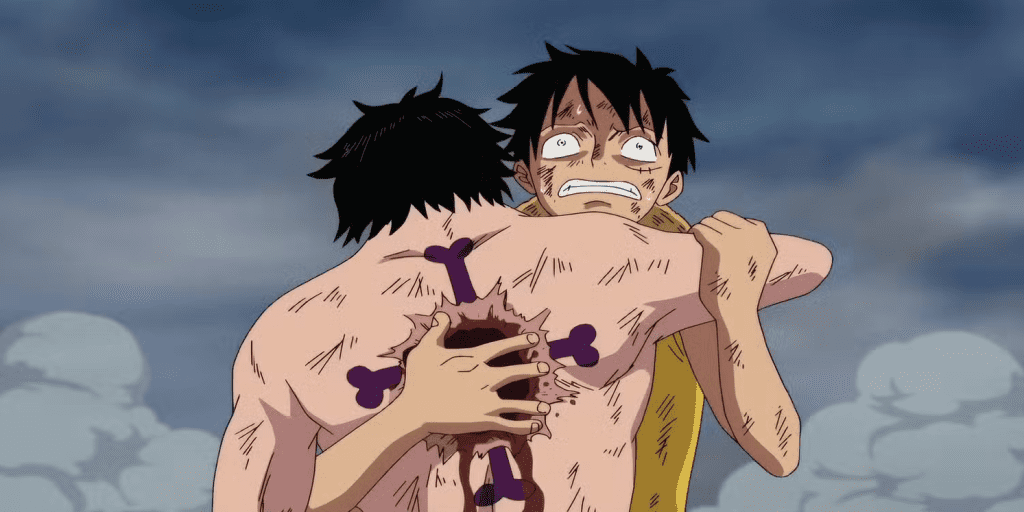
There is a reason Ace’s death is still the benchmark against which every other anime tragedy is measured: it is perfectly constructed.
Everything about the Marineford Arc was built toward rescue. Luffy broke out of Impel Down — one of the most impossible feats in the series. He fought through an entire war. He reached his brother. Ace was freed from his execution platform. They were running together. It was over.
Then it wasn’t.
Admiral Akainu targeted Luffy — exhausted, barely standing — knowing exactly what he was doing. And Ace, without a moment’s hesitation, turned back. His arm caught Akainu’s magma fist. The attack pierced through his chest.
The shock comes not just from the death but from the timing. Victory had arrived. It was tangible. And it was taken away in seconds.
In his final moments, Ace does not rage against what happened. He does not regret his choice. He asks Luffy one question — whether his life had value, whether someone was glad he was born. And when Luffy answers through his sobbing, Ace dies grateful. He thanks his crew. He thanks his brother. He goes in peace.
Luffy does not.
What follows is Luffy’s complete emotional collapse — the protagonist of one of anime’s most resilient series, a person who has never quit, who has overcome every obstacle, who always finds a way — reduced to a person who cannot stand up. Who cannot process what just happened. Who has lost the one person he could not lose.
The contrast between Ace’s peaceful acceptance and Luffy’s total devastation is what makes this the saddest moment in anime. Not the death alone. The aftermath. The gap between a man who found peace and the brother left behind without it.
Honourable Mentions
Itachi’s Death (Naruto Shippuden) — A villain who was never a villain. When the truth of Itachi’s life is finally revealed, his death transforms from a victory into one of the most heartbreaking revelations in the series.
Maes Hughes’ Death (Fullmetal Alchemist: Brotherhood) — A brief but devastating loss made worse by one thing: the phone call his daughter makes to his office asking when daddy is coming home.
Violet’s Realization (Violet Evergarden) — The moment Violet finally understands what the Major’s last words meant. Delayed grief, perfectly executed.
Frequently Asked Questions
What is the saddest anime moment of all time? Ace’s death in One Piece’s Marineford Arc is widely considered the saddest anime moment of all time, combining perfect narrative setup, shocking timing, and devastating emotional contrast between Ace’s peace and Luffy’s collapse.
Is Grave of the Fireflies the saddest anime ever made? Many critics and longtime anime fans consider Grave of the Fireflies the saddest anime ever produced. It is a 1988 Studio Ghibli film, not a series, and its portrayal of two orphaned children during World War II remains unmatched in its emotional weight.
What is the saddest death in Fullmetal Alchemist Brotherhood? While Maes Hughes’ death is one of the most cited, Nina Tucker’s fate is broadly considered the most disturbing and emotionally difficult moment in the series.
Does Your Lie in April have a sad ending? Yes. Kaori dies from her illness at the end of the series. The final episode reveals she had loved Kousei throughout the entire story — a revelation that reframes everything that came before it.
Which anime has the most emotional moments overall? One Piece, Fullmetal Alchemist: Brotherhood, and Attack on Titan consistently rank as the anime series with the most emotionally impactful moments across their full runtimes.
Where can I watch these anime? Your Lie in April and Fullmetal Alchemist: Brotherhood are available on Crunchyroll and Netflix. Attack on Titan is on Crunchyroll and Funimation. One Piece is on Crunchyroll, Netflix, and Funimation. Grave of the Fireflies is available on HBO Max and various digital rental platforms.
All series featured in this article are available on Crunchyroll. Individual availability may vary by region.