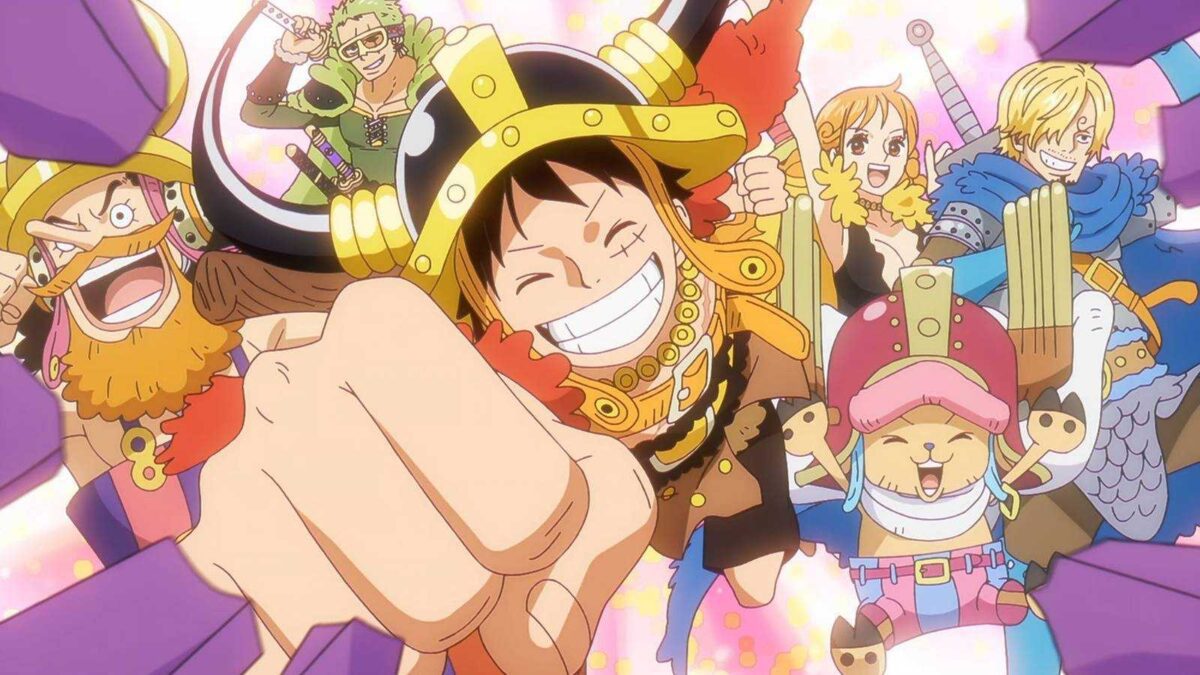
Every time Oda splits the Straw Hats up, fans complain online. “Why is my favorite character stuck in a side subplot?” “Why can’t they just fight Kaido together?” And then, every single time, by the end of the arc, those same fans are losing their minds because someone just unlocked something completely broken.
That is not coincidence. That is the formula.
Oda built his entire power system around one idea, and Silvers Rayleigh said it out loud during the Whole Cake Island arc: “Haki blooms in the extreme heat of battle.” That is not a throwaway training quote. It is the mission statement for One Piece’s entire growth structure. Once you see it, the whole series reads differently.
What “Haki Blooming” Actually Means
The term comes directly from Rayleigh during Luffy’s mirror match against Katakuri. But the concept goes back much further than the word itself. Oda was writing this exact idea before Haki even had a name.
The clearest way to break this down is to split the series into two parts: the pre timeskip prototypes, where characters experienced Haki Blooming without knowing what it was, and the post timeskip official blooms, where Oda executed it consciously with the named system fully in place.
Part One: The Pre Timeskip Prototypes
Alabasta: Zoro Cuts the Uncuttable
Zoro nearly dies fighting Mr. 1 in Alabasta. No tricks available, no power ups to grab, no Luffy coming to bail him out. The whole fight is Zoro alone, facing a man whose body is literally made of steel blades.
When he stops forcing it and clears his mind entirely, something shifts. He hears the breath of all things. He cuts Mr. 1 in half.
Many fans interpret that breakthrough as Zoro unconsciously tapping into an early form of Advanced Armament Haki (Ryou), years before the concept had a name. Oda has not confirmed this explicitly, but the mechanics line up almost perfectly. The isolation, the near death, the willpower spike, the impossible cut. It follows the same pattern that plays out in every major bloom that comes after it.
Skypiea: The World Already Had Observation Haki
The Skypiea villains called it Mantra. They used it to predict movements, read intentions, sense location without sight. Oda later flat out confirmed that Mantra was just Skypiea’s local name for Observation Haki.
The entire survival game on Sky Island forced every Straw Hat to fight in isolated pockets across a massive terrain. Nobody could rely on the group. Luffy, who had zero idea what Mantra even was, found a way through pure instinct and willpower. Prototype bloom.
Enies Lobby: Gears, Asura, and the Spark of Passion
Luffy invents Gear 2 and Gear 3 against CP9 with no guidance. Nobody taught him; he figured it out mid fight because the situation demanded it and nobody was there to buy him time
The rest of the Monster Trio experienced their own massive prototype blooms in strict isolation. Zoro’s Asura moment against Kaku reads like something far beyond physical swordsmanship. Many fans believe that three headed manifestation is a raw expression of Conqueror’s Haki spirit a willpower so overwhelming it creates a visible illusion of a demon.
Right down the hall, Sanji faced Jabra alone. To shatter CP9’s iron hard Tekkai defenses, his pure passion and fiery spirit broke outward, manifesting as Diable Jambe. At the time, it looked like a simple friction technique, but it laid the spiritual foundation for what would later become his Haki infused flames. Oda used this isolated gauntlet to force all three of his top combatants to tap into their hidden potential simultaneously
Marineford: Luffy’s Desperate Cry
Before Koby’s awakening, Luffy experiences the most explosive prototype bloom of the entire war. Stripped of his crew and running purely on adrenaline, Luffy watches the executioners raise their blades to kill Ace. With no safety net and zero time left, his raw, unguided willpower explodes outward in a desperate scream. This accidental burst of Conqueror’s Haki knocks out the executioners and stuns the entire battlefield, from Vice Admirals to Emperors. It is the ultimate proof of the formula: when a character is entirely isolated and pushed to the absolute brink of despair, their spiritual ceiling shatters to achieve the impossible.
Marineford: Koby Hears Death
Koby is a minor side character not expected to pivot a war. Yet, when the battlefield chaos reaches a horrific peak, something cracks open inside him. He begins vividly hearing the psychological “voices” of dying soldiers fading away in real time.
That is Observation Haki aggressively unlocking under pure psychological shock. There was no prior training or warning just a scenario so intense that his dormant spirit had nowhere to go but outward. It was an accidental bloom so violent that it forced his existing mentor, Vice Admiral Garp, to immediately step up his training after the war to help him contain it.
Part Two: The Post Timeskip Official Blooms
The Detail Everyone Missed in Rayleigh’s Elephant Demonstration
While Koby was learning to manage his accidental awakening, Luffy was starting a structured path. In Chapter 597, Rayleigh demonstrates Armament Haki to Luffy on Rusukaina Island. He blasts a charging elephant away without touching it, using an invisible shockwave. Luffy sees it, registers it, and then spends two years learning the basics.
Here is the part that genuinely changes how you read the series: Rayleigh was not showing Luffy basic Haki. He was showing him Advanced Armament, the emission technique that projects your spirit outward to destroy something from the inside without physical contact. Luffy had no frame of reference to decode what he was watching at the time.
It takes until Wano, over 400 chapters later, for Luffy to recall that exact moment while locked in Udon Prison. That memory is precisely what allows his Armament to evolve into Ryou. Rayleigh gave Luffy a front row seat to the advanced form before the timeskip even happened. Luffy just did not yet have the experience to understand what he had seen.
Oda planted a tutorial for a technique 400 chapters before the character learned to perform it. That level of construction is hard to overstate.
Dressrosa: Two Blooms in One Arc
Usopp is separated from Luffy and Zoro completely in Dressrosa. He has a slingshot, plants, and nerves. Sugar needs to be stopped, and nobody else can get close enough.
Under pressure so intense he starts crying, Usopp fires a shot through solid walls at a target he cannot directly see. His Observation Haki unlocks in that exact second, letting him sense her aura through the obstacle.
Meanwhile, Luffy’s Gear 4 debuts in Dressrosa too, after he is left behind to fight Doflamingo and stall long enough for the crew to escape. Two blooms. Same arc. Both triggered by isolation.
Whole Cake Island: The Arc That Named the Formula
Luffy goes into Whole Cake Island behind enemy lines and runs a mirror match against Katakuri, a man with a bounty of over 1,057,000,000 Berries on his head and mastery of Future Sight Observation Haki.
Every time Luffy almost figures out the rhythm, something breaks the flow. He gets overwhelmed. He loses. Then Rayleigh’s voice hits the flashback: “Haki blooms in the extreme heat of battle.”
By the end of that extended, brutal, completely isolated fight, Luffy’s Future Sight unlocks. He does not just see a few seconds ahead. He starts matching Katakuri’s level and forces the fight to its actual conclusion. The formula performs exactly as stated.
Wano Country Arc: The Gauntlet That Built Three Gods Simultaneously
Wano runs the formula at full scale, across three crew members at once.
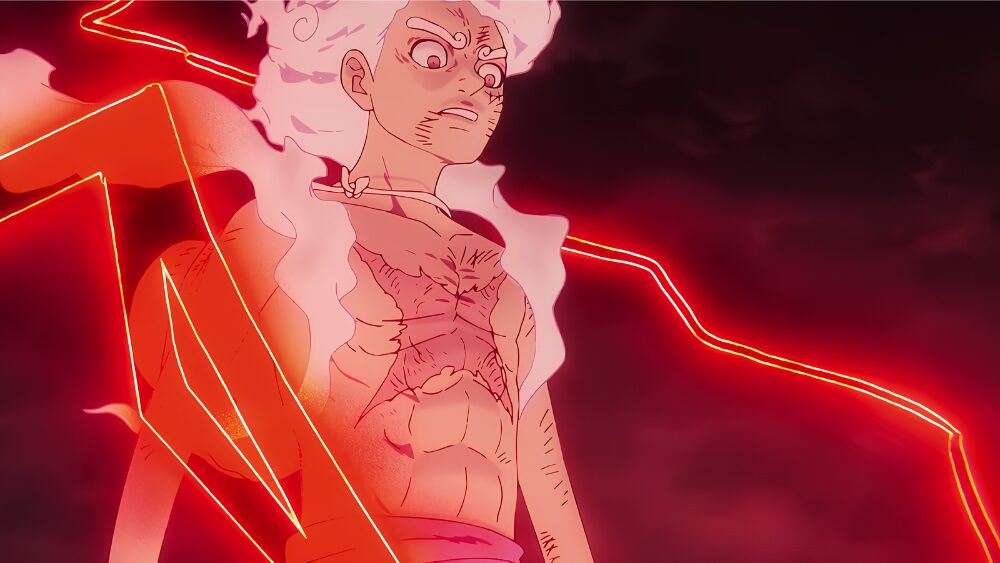
Luffy on the rooftop: Early in the Onigashima raid, the Supernovas fought Kaido and Big Mom simultaneously in a brutal war of attrition. They were surviving, not winning. The real narrative shift happened when the alliance managed to separate the Emperors, allowing Luffy to step up and insist on a pure, isolated one on one with Kaido.
The story suggests that Gear 5 only awakened because Luffy was pushed to the literal edge to the point his heart stopped. The Joyboy fruit needed his entire being to catch up to its potential. If his crewmates had still been there rotating in to absorb hits, that specific threshold may never have been crossed.
Zoro vs. King: After shattering his bones to block a combined Emperor attack on the roof, Zoro was pumped with a high stakes Mink recovery drug and isolated against King. While he briefly clashed alongside Sanji against both Calamities, the real breakthrough arrived only when he faced King alone. Facing a Lunarian who was impervious to damage, Zoro had to let Enma drain his Haki to a dangerous level. He stopped holding back, accepted the full weight of what a kingly conqueror is, and unlocked Advanced Conqueror’s Haki King of Hell style.
Sanji vs. Queen: Queen mocks Sanji’s heritage the entire fight. Personal, relentless, targeted. Sanji has nobody beside him to deflect that weight. Mid fight, his body starts mutating, activating cybernetic changes he has always rejected. Being alone forced him to face his own lineage without any distraction and channel it into something new. Ifrit Jambe, blue flames. A technique that very likely never exists if Zoro is standing next to him in that corridor.
Three simultaneous blooms. All three required isolation to trigger.
The False Peak and the Real Ceiling
In the Final Saga, Oda builds a trap. The crew looks genuinely untouchable.
Zoro handles an Awakened CP0 Lucci like a warmup fight. Sanji physically deflects Kizaru’s light. Luffy holds his ground against a Buster Call, an Admiral, and all five Gorosei simultaneously with Gear 5 active.
Fans feel like the Monster Trio has reached the top of the world.
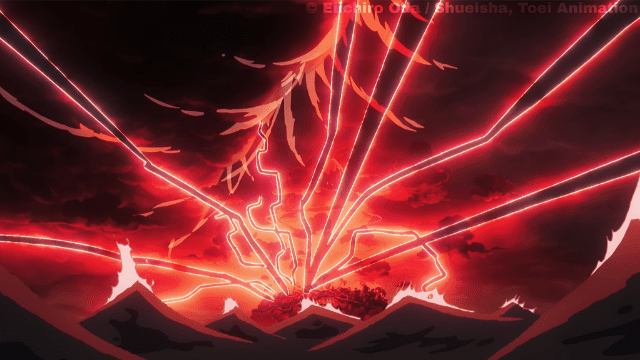
Then Emeth unties Joy Boy’s stored Haki knot.
The battlefield freezes. Vice Admirals drop. The massive burst of raw Supreme King Haki travels instantly across the terrain, aggressively cancelling the demonic transformations of the attacking Five Elders. With their forms shattered and their summoning lines broken, three of them are violently forced to snap teleport all the way back to the Room of Authority in Mary Geoise. Even Imu, sitting thousands of miles away, drops to their knees trembling in raw terror.
800 years of stored Haki, from a single knot, does all of that in one second.
This is Oda telling the audience directly: Gear 5 is the vehicle, not the destination. Devil Fruits have ceilings. Haki does not. Joy Boy’s released Haki did more damage than the entire Onigashima raid combined. The bloom is not over. Luffy is still mid growth.
The Writing Mechanics Behind the Formula
Beyond Haki, the separations solve real structural problems that come with writing a ten person crew.
With all ten Straw Hats in the same room, giving anyone meaningful dialogue is nearly impossible without the scene turning into chaos. Breaking them into smaller groups lets characters who rarely share space build real chemistry. Zoro and Robin. Sanji and Usopp. Pairs that never get a chance to exist inside the full group dynamic.
It also removes the Luffy problem. When Luffy is present, everyone defaults to him and stops growing. Separating Nami, Usopp, and Chopper forces them to stop hiding behind his strength entirely. Thriller Bark only works as an arc because those three have to actually figure things out on their own.
Structurally, splitting the crew lets Oda run multiple climaxes at the same time. While Luffy fights the main boss, Sanji is finding an escape route, Nami is stealing critical intel, and Usopp is sniping from the shadows. The pacing stays fast because every storyline is in forward motion simultaneously.
It also accelerates the world building. One Piece carries more lore per chapter than almost any other manga. Sending different crew members to different locations means more of that world gets explored in less time, without it reading like an encyclopedia entry dropped into the plot.
Our Take
The Haki Blooming lens reframes the entire series in a way that is hard to shake once you have seen it. What looked like Oda’s pacing habit of splitting the crew turns out to be a fully intentional growth philosophy baked into the story from Alabasta onward.
The fact that Zoro cutting Mr. 1 and Luffy awakening Gear 5 follow the exact same mechanical principle is not a coincidence. That is a 25 year author who knows what he is building, chapter by chapter. The Emeth reveal makes it sharper still. Gear 5 is not the ceiling. Joy Boy’s raw Haki is the destination Luffy is still climbing toward, and Oda has been pointing at that destination since before Haki even had a name.
Sources: One Piece manga by Eiichiro Oda (Shueisha) | Anime adaptation (Toei Animation) | Official English translations via Viz Media