One Piece Elbaph Part 1 does not fix the anime’s pacing, but it does make that pacing more deliberate. Across Episodes 1156 to 1168, broadcast from April 5 through June 28, 2026, more of the episodes know what they are for, and the best ones give a mystery, an arrival or an emotional payoff room to land. The habit of cramming too many storylines into one installment has survived, though. It now shows up in a few specific places.
Elbaph is the first major test of Toei’s two cour annual format, announced in November 2025, with roughly 26 new episodes a year. Toei said the change was meant to let the anime reflect the source story’s content, rhythm and pacing more closely. That promise is worth checking, and the first 13 episodes are enough to do it. They make a strong first act. They do not make a finished arc, since the story continues from Episode 1169.
Where One Piece Elbaph Part 1 Gets Its Pacing Right

The Block Kingdom is the clearest proof. Episodes 1157 to 1159 drop Nami and Usopp into a miniature world where nothing makes sense at that scale, then reveal that the place has been constructed, then explain how the illusion works. Each episode changes what the viewer understands. That is what better pacing should mean: a mystery that advances instead of repeating the same question across three episodes. It also gives scale a job in the story before Elbaph’s real scale appears.
Loki’s introduction is staged with similar care. Episode 1160 brings him in only at the end of Luffy’s descent into Elbaph’s lower region, after the country has already described him as its accursed prince. The meeting itself and the bargain he offers wait for Episode 1161. Reputation comes first, the person second, the deal third. The cost is that Loki stays unresolved through this stretch, so anyone hoping for a finished character will get setup instead.
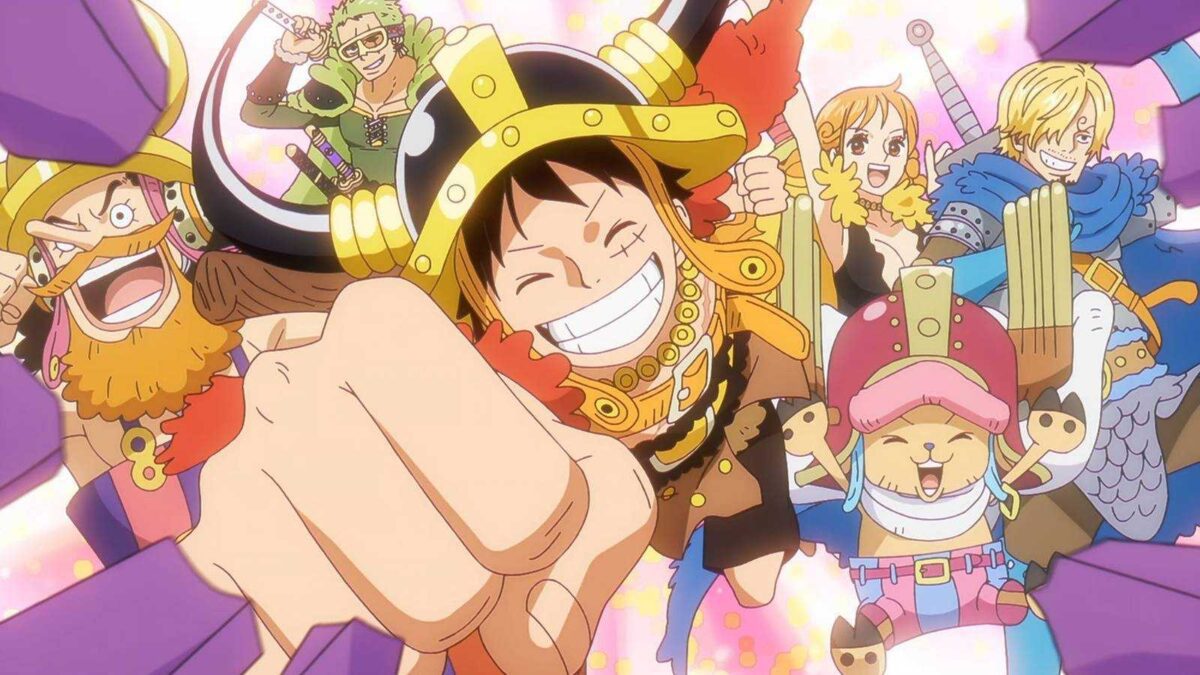
Part 1 is also willing to be slow when the slowness has a destination. Episode 1162 gathers the separated groups, carries the Great Eirik along an enormous rainbow route and ends on Usopp’s tears at his first view of Elbaph village. Taken alone, that could read as an episode where little happens. It works because Usopp’s years of anticipation give it an emotional endpoint. The early pacing here is often slow in duration but not static in purpose.
Robin’s much anticipated payoff gets the same patience. Episode 1163 is built around it, and the production marks the scene with its own insert song, “Sekai wa Hitori Janakatta” by Maki Otsuki. The next episode does not hurry off. It lets the aftermath register before widening into the school and library. Payoff, reaction and consequence each get space.
Where the Old Problem Returns
The format has not removed overcrowded episodes. It has made them stand out against episodes with clear jobs. The premiere, Episode 1156, juggles the Great Eirik celebration, Bartolomeo’s confrontation with the Red Hair Pirates, developments at Hachinosu, the missing Sunny group and Nami waking up somewhere unknown. That is a lot of housekeeping before the local mystery begins in the closing section, and it is the best argument that the new model has not ended episodes serving too many plotlines at once.
Episode 1165 has the same trouble in another form. The Walrus School, Colon, the Owl Library, Treasure Tree Adam, the welcome banquet, Jarul and unidentified outsiders at Aurust Castle all compete for one episode. The density is partly a pivot from exploration into social, historical and political material, which is a fair defence, but the episode is still crowded.
The closing run has a different issue. Episodes 1165 to 1168 let the outside threat drift from the edge of the celebration toward the centre of the story while royal and ancient history develop alongside it. That gradual approach is a real strength. Yet by Episode 1168 the conflict is still being enlarged, not resolved, and escalation is not the same as payoff. Viewers waiting for Elbaph itself also wait a while: the Block Kingdom runs through Episode 1159, the real island appears in 1160 and the inhabited country arrives in 1162. The delay is not empty, but it is a slow door into the arc.
What Elbaph Does With Its Ideas
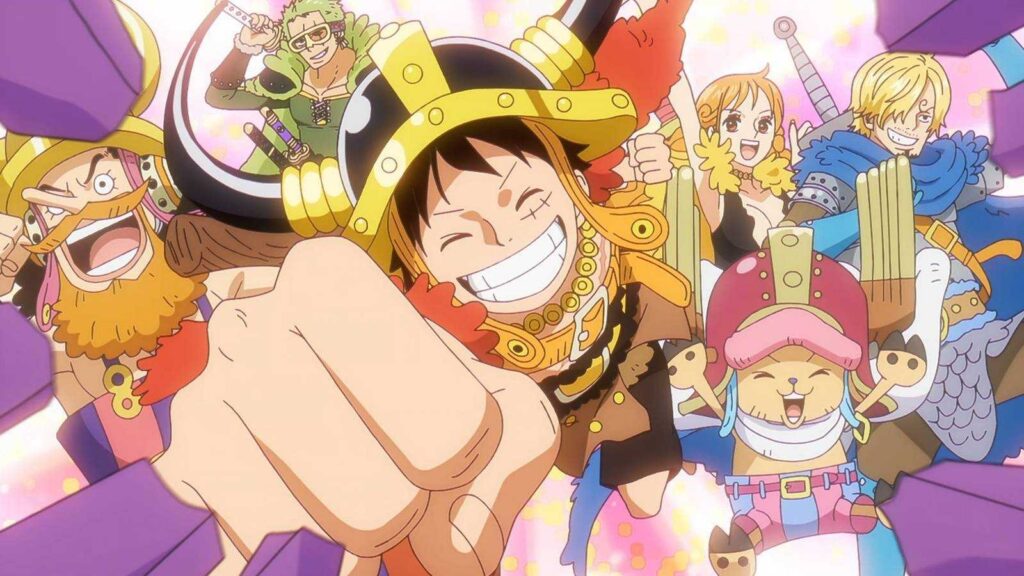
Usopp carries the most interesting idea in Part 1. He cries when he confirms he has reached Elbaph in Episode 1160, and again at the sight of the village in 1162. Then Episodes 1164 and 1165 show giant children being raised to be gentle: boys corrected by girls apologise instead of escalating, and the Walrus School is described as raising kind, pure children. Usopp himself is surprised. Elbaph grants his dream and then complicates it, through contrast rather than a speech. This is payoff, not transformation, because Part 1 does not complete an arc for him. It does raise a question about what a warrior is, one that Elbaph’s present generation may be answering differently from its legends.
A second thread runs from the emotional payoff of Episode 1163 into the school and library material, and on to Franky’s tour of Treasure Tree Adam in Episode 1168, where he comes across an ancient wall painting. Personal memory gives way to institutional preservation, then to history far older than either. That gives the back half more shape than a payoff, a school visit and some lore would suggest. The sequence is asking what remembering is for, not just reminding the audience that someone remembers.
Reputation is a quieter motif. In Episode 1160 the Straw Hats learn that a damaging public story about them is already circulating, and Loki is defined first by what the country says about him. Neither strand is settled by Episode 1168, so it is a developing idea rather than a finished statement.
So, Has the Pacing Been Fixed?
Not fixed, but more intentional. The evidence points to pacing that is purposeful rather than uniformly faster: a mystery that moves in stages, a major arrival that gets room to matter, an emotional payoff with an aftermath. What remains is a problem of accumulation. The premiere and Episode 1165 are overloaded, and the closing run piles up mythology and incoming conflict without cashing any of it in.
Part 1 suits viewers who enjoy episodes with clear jobs and character payoffs, especially for Usopp and Robin. Anyone who wants a contained arc with a climax should treat these 13 episodes as a first act. Whether Episodes 1169 onward turn that setup into payoff will decide how well the format holds up.
Sources: ONE PIECE.com | Crunchyroll