Most One Piece fans still picture Loki the way Elbaf itself does: the prince who murdered his own father. That is the story the kingdom believes, and for a long time it was the story readers believed too. The truth the manga eventually lays out is messier and far more painful than that headline suggests. Understanding it means asking a different question than the one everyone starts with. Not did Loki kill Harald, because he did. The real question behind One Piece Loki is what that decision actually changed, for Loki himself, for Elbaf, and for how far the World Government’s grip on the giants really reached.
Harald’s Dream for Elbaf Ended in Tragedy
Before any of this turned violent, Harald had a plan. He wanted Elbaf connected to the outside world through the World Government, and he believed that connection could modernize the kingdom without erasing what made it Elbaf. He had stopped believing that raw military strength alone was enough to secure Elbaf’s future. His intention was to see the kingdom formally join the World Government, then step aside and hand the throne to a younger successor once that goal was reached.
That ambition is why he accepted a Shallows Covenant, and later why he accepted something far more dangerous. Imu named him a Knight of God and offered him a Depths Covenant instead. The manga is specific about what that agreement granted him: immortality, immense power, and the ability to travel through the Abyss. It also came with a price Harald did not fully grasp until it was too late. Absolute obedience to Imu, regardless of distance. Harald immediately realized what the arrangement really meant. The World Government was never going to treat Elbaf as an equal partner. The giants were only ever meant to become a military asset for someone else’s war.
He was not written as a tyrant chasing power for its own sake. He was a king who believed he was protecting his people and got exploited for it, and that distinction is the whole foundation the rest of this story is built on.
Loki’s Choice Saved Elbaf at an Unimaginable Cost
The Depths Covenant did not just corrupt Harald’s judgment. It began taking his body. As the possession advanced, Harald ordered his own guards to chain him before he lost control entirely, and he summoned both Jarul and Loki to Aurust Castle. Once the transformation overtook him fully, he turned on the people meant to protect him, and his new immortality meant his guards could not stop him even after he begged them to try.
In that state, with what little control he had left, Harald admitted the truth out loud. The World Government had deceived him. He told Loki that Elbaf’s legendary Devil Fruit was the only thing capable of ending his now immortal body, and he instructed Jarul to hand that fruit to his son. What he asked next is the part fans tend to compress into a single ugly sentence, and it deserves better than that.
He begged Loki to eat the fruit, kill him, tell Elbaf he had been the worst king in its history, and take the throne once it was done. He believed his son was the only person left who could save Elbaf from the monster he had become.
Before Loki could carry that plea out, Harald’s transformation finished on its own, and Aurust Castle fell into chaos. The framing here matters more than almost anything else in this story. This was never simply Loki killing his father to obtain a Devil Fruit. The fruit was the tool Harald identified to end a threat he could no longer control himself. It was never Loki’s motive to begin with.
The Truth About Harald Changed Elbaf’s Entire Political Story
For years, Elbaf only knew the surface version. Loki became infamous as the prince who murdered the king, and the truth behind Harald’s tragedy stayed buried from almost everyone in the kingdom. Elbaf never did become part of the World Government. It stayed independent, which on its own tells you Harald’s original plan never reached the finish line he imagined for it.
Once the actual sequence of events is known, the relationship between Harald, Loki, and the World Government reads completely differently. Harald’s cooperation was never about ambition or conquest. It came from genuine hope that Elbaf could benefit from that alliance. Imu’s manipulation through the Covenant system exposes what the World Government actually wanted the entire time: giants who would fight on command, not a partner kingdom with its own voice in the matter.
There is a second event worth separating out here, because it is easy to blur the two together, and the manga is careful not to. Years after Harald’s death, while imprisoned, Loki was approached by Gunko and Shamrock of the God’s Knights, who tried recruiting him into the Knights of God. Loki turned the offer down flat, refusing to become another servant of the World Nobles. That happened under completely different circumstances than his father’s story and years apart from it. Treating the two as one event flattens a distinction the source material goes out of its way to keep separate.
Why This Could Reshape the Final War
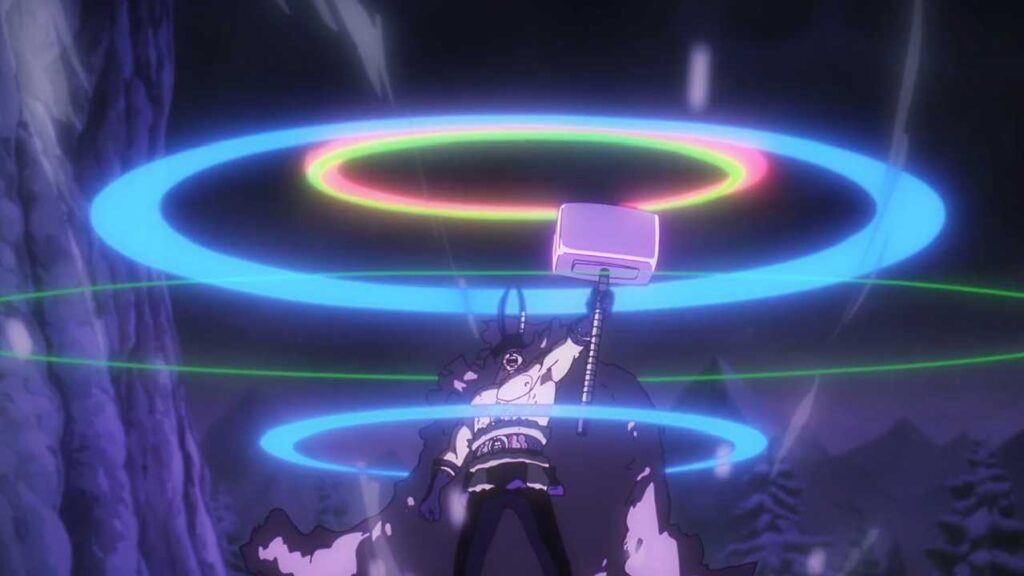
Here is what the manga has actually confirmed. Imu wanted Elbaf’s giant warriors as a military asset. Harald’s plan to bring the kingdom into the World Government collapsed once Imu’s manipulation took hold. Loki’s actions ended Harald from continuing as an unwilling instrument of that control, and Elbaf remains independent to this day. None of that is speculation. It happened on the page.
What follows is Content Rider’s read on it, not confirmed canon, so treat it that way. Loki’s decision may have preserved Elbaf’s independence at the exact moment Imu’s grip was closest to becoming permanent. By absorbing the blame for his father’s death rather than letting the full truth fracture the kingdom’s trust in its own royal line, Loki may have also prevented a different kind of collapse, a political one inside Elbaf itself. Put those two pieces together and one possible consequence is that Elbaf enters the Final War as an independent power rather than a nation the World Government can simply call on.
His later refusal of the God’s Knights fits that same pattern. Whatever Loki ends up doing once the fighting starts, he has already said no to becoming the World Government’s instrument at least once already. That is not proof of anything about the Final War itself. It is one thread worth watching as the story moves forward.
Conclusion
Loki’s decision did not just end his father’s life. It kept Elbaf out of Imu’s direct control at the exact moment that control was closest to becoming permanent. The kingdom stayed independent because of what happened inside Aurust Castle, not because of anything that has happened since. Whatever role Loki plays once the Final War arrives, that outcome is already settled. The politics changed before the war ever started.
Content Rider’s Editorial Verdict
Our Outlook
Loki’s arc is the kind of reveal that reframes an entire character without cheapening what came before it. Reading him as a patricide first, then learning what Harald actually asked of him, makes the Elbaf flashback one of the more quietly devastating stretches in the manga. Oda does not rush the reveal either. He lets Elbaf, and the reader, sit with the wrong version of events before pulling it apart piece by piece. That is a hard thing to write well, and this arc earns it.
The X Factor
The detail worth watching going forward is not Harald. It is Loki’s flat refusal of the God’s Knights. A king who trusted the World Government died for that trust. His own son was offered a similar position years later and turned it down without hesitation. That contrast is doing real work in the background of this story, and if the Final War does put Elbaf on the field, that refusal is probably a big part of why.
Why did Loki kill Harald in One Piece?
Harald asked him to. Once the Depths Covenant began taking over his body, Harald begged Loki to eat Elbaf’s legendary Devil Fruit and end his now immortal life before he lost himself completely.
What is the Depths Covenant in One Piece?
It is an agreement Imu offered Harald after naming him a Knight of God. It granted immortality, immense power, and travel through the Abyss, in exchange for absolute obedience to Imu no matter the distance.
Did Harald really try to join the World Government?
Yes. Harald believed connecting Elbaf to the World Government would modernize the kingdom without destroying its identity, and he planned to step down once that goal was reached. He later realized the alliance was never meant to treat Elbaf as an equal.
What does Loki’s decision mean for the Final War?
Nothing about that is confirmed yet. What is confirmed is that Loki’s choice kept Elbaf out of Imu’s direct control, which is one reason some readers expect the kingdom to enter the Final War as an independent power rather than a World Government asset.
Sources: Official One Piece manga by Eiichiro Oda, Shueisha | MANGA Plus by Shueisha | VIZ Media