
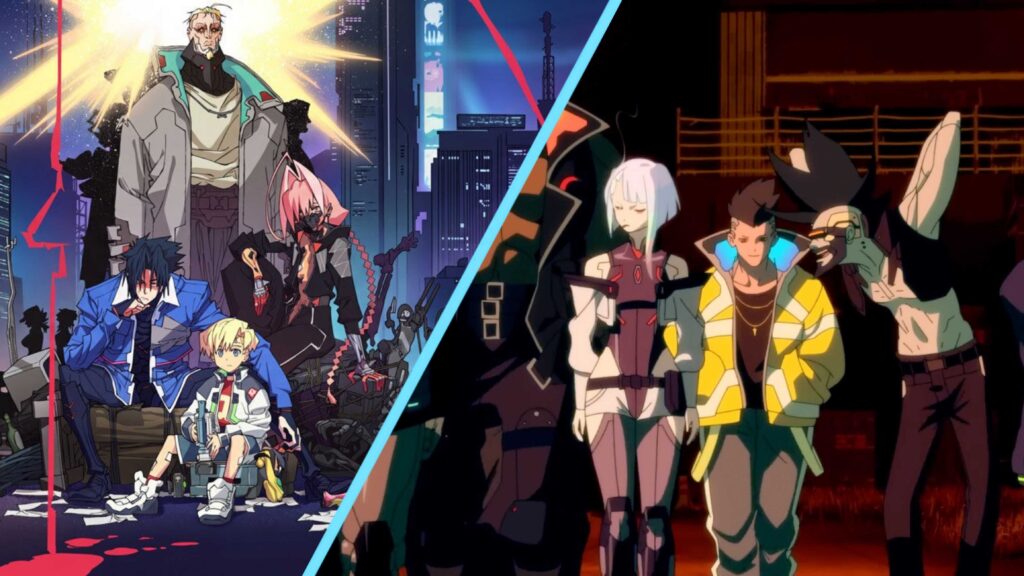
Can you watch Cyberpunk: Edgerunners 2 without Season 1? Yes. CD PROJEKT RED, Studio TRIGGER and Netflix all present the sequel as a standalone story with a new cast, so nothing about it requires homework. But “you can” and “you should” are different answers. The real cost of starting with Season 2 is not confusion. It is that the new series refers back to major events from the first one, and a newcomer meets those outcomes before the original has had a chance to deliver them.
What “Standalone” Actually Means
Netflix released all ten episodes on October 20, 2026, and the official framing has been consistent. CD PROJEKT RED announced the series in July 2025 as a story told in ten episodes within the existing Cyberpunk universe, and made clear that David Martinez’s story had already concluded. On August 21, 2026, Netflix described an entirely new group of mercenaries and a different central narrative, using the word standalone outright.
The more revealing statement came on November 5, 2026, in CD PROJEKT RED’s AnsweRED podcast. Showrunner Bartosz Sztybor explained that the team deliberately chose an anthology structure while preserving David’s legacy. He has also described the two seasons to GamesRadar+ as thematic opposites: in Season 1 a young outsider becomes a famous edgerunner, and in Season 2 a once famous edgerunner loses his status, his enhancements and his place in society. He describes the two as being in constant dialogue.
So “standalone” describes plot dependency, not isolation. Season 2 has new main characters and its own central story, and you do not need Season 1 to follow every major event. But it is not set in an unrelated universe, it does reference Season 1, and it does not keep newcomers safe from spoilers.
What Season 1 Adds Before You Start
Season 2 teaches its own ground rules. Episode 1 shows Weak’s cyberpsychotic collapse, so a newcomer understands from the start that heavy cybernetics can destroy a person. What Season 1 adds is the emotional cost, because its viewers have already watched another character go through the same thing.
Chrome works the same way. In Season 1, David’s Sandevistan shows what cybernetic enhancement can give a person. Season 2 turns that around: Weak has to live after losing his enhancements, while Talia is drawn toward replacing more of her body. Roman, who values traditional cameras and recorded film, also reads more clearly against the braindance culture that Season 1 opens with, although Sztybor noted that actual braindance experiences are not a major feature of Season 2.
Both series share a Night City of corporate control, crime and inequality, and Arasaka still influences events in the sequel. Kang Tao, a prominent corporation in Season 2’s central conflict, is explained within Season 2 itself. The Blackwall and the wider history of rogue AIs are advanced background, useful for interpreting Capri but not something Season 2 requires you to study first.
The Best Order, and Where the Game Fits
Release order is also the best order: Cyberpunk: Edgerunners (2022) first, then Cyberpunk: Edgerunners 2 (2026), each running ten episodes. The timeline matches. Season 1 takes place in 2076, Cyberpunk 2077 in 2077, and Season 2 in 2078. CD PROJEKT RED lore specialist Patrick K. Mills confirmed the 2078 placement in an October 20, 2026 Bluesky post, correcting earlier speculation about whether the sequel came before the game.
Playing the game in between is optional. Because it has branching outcomes, Season 2’s setting should not be read as confirming any one ending. Neither anime adapts a manga; both are original stories.
Where the Two Seasons Connect
This Part contains Major spoilers for both Cyberpunk: Edgerunners seasons follow.
Tanaka’s death changes D’s revenge. In Season 1, Episodes 5 and 6, Maine’s crew captures Arasaka executive Tanaka. The operation collapses, Tanaka dies, and Maine’s cyberpsychosis spirals into catastrophe. In Season 2, Episode 8, D finally learns that Tanaka ordered the operation that got his Snake Nation clan massacred, but Tanaka is already dead. D never gets to confront the person responsible, which changes the emotional direction of his revenge story. It is the clearest direct cause and effect between the seasons.
The Arasaka records. In Season 2, Episode 4, D and Roman infiltrate an Arasaka facility using Capri’s abilities and find records connecting D, Talia and David Martinez through unusually high compatibility with cybernetic technology and experimental research. Season 1 viewers will recognise why David appears, since his exceptional cyberware tolerance and Arasaka’s interest in using him for its cyberskeleton project build across Episodes 6 to 10. A newcomer may simply read his name as another mysterious test subject. The records alone do not establish how far Arasaka’s experiments with David went.
David’s fate. Season 1’s finale, Episode 10, ends with David confronting Adam Smasher and dying, while Lucy survives and eventually reaches the Moon. Season 2 treats that as Night City history: David is remembered as a famous edgerunner, and D discusses his predecessor in the finale. Starting with Season 2 means learning significant details about David’s fate before the original ending.
Two Davids. D also turns out to be named David. The two are distinct people, not an identity twist, and the shared name reinforces the deliberate parallels between their lives and Arasaka’s experimental interests.
The Moon. Lucy’s dream of reaching the Moon is central to David’s final sacrifice. Season 2 ends with D’s ambiguous departure toward a distant light in the sky, which looks like a visual and thematic echo. That is an interpretation rather than something either series states.
What Viewers and Critics Say
Viewer evidence is anecdotal. On r/Edgerunners, one user said on October 23, 2026 that Netflix’s playback selection had them start with Season 2, and that they got through almost the whole season without realising it was the newer installment. Another said on October 29 that they finished all ten episodes believing they were watching Season 1. Those are single accounts, and they do not show that either viewer caught every crossover. In other watch order threads between October 20 and 25, users recommended Season 1 first, mainly because Season 2 references or spoils the original, while others stressed that the two are different stories.
GamesRadar+’s Jordan Farley gave the series 4/5 and states explicitly that Season 2 can be watched without Season 1 or the game. Kotaku’s Kenneth Shepard (October 19, 2026) was mixed, criticising the move away from Season 1’s concentrated structure toward several loosely connected perspectives. Anime Corner’s Marko Jovanovic (October 21) was mixed positive and felt ten episodes were not enough to develop every protagonist. Push Square’s Robert Ramsey (October 27) accepted the anthology approach but found that the series struggled to match the original. These reservations concern structure and length, not viewing order.
At the time of writing, Rotten Tomatoes lists Season 1 at 100% with critics and 95% with audiences, and Season 2 at 80% from critics (10 reviews) and 65% from audiences (250+ ratings). That gap points to a less uniform reception, but it does not show that watching Season 1 first makes Season 2 more enjoyable.
Can You Watch Cyberpunk: Edgerunners 2 Without Season 1? Yes, but Start With Season 1
Three things hold at once. Season 2 is accessible on its own, with its own cast, conflicts and motivations. Season 1 adds real context, and at least one direct causal link shows it can change how a Season 2 event lands. And watching Season 2 first can spoil Season 1, because the sequel refers to major outcomes from its predecessor. The cost of reversing the order is less about understanding the plot than about losing surprises and emotional context meant for a first viewing. If you only want to try the newer anime, you will be able to follow it. If you plan to watch both, Season 1 first is the better choice.
Sources: CD PROJEKT RED | Cyberpunk Official Site | Rotten Tomatoes | Radio Times | GamesRadar+