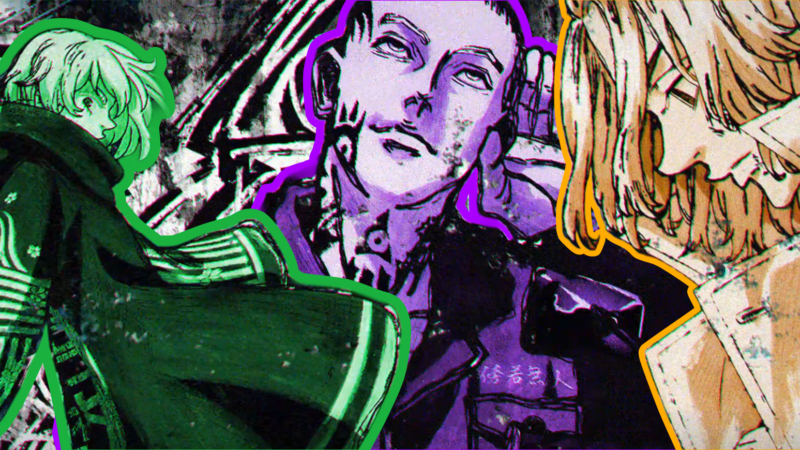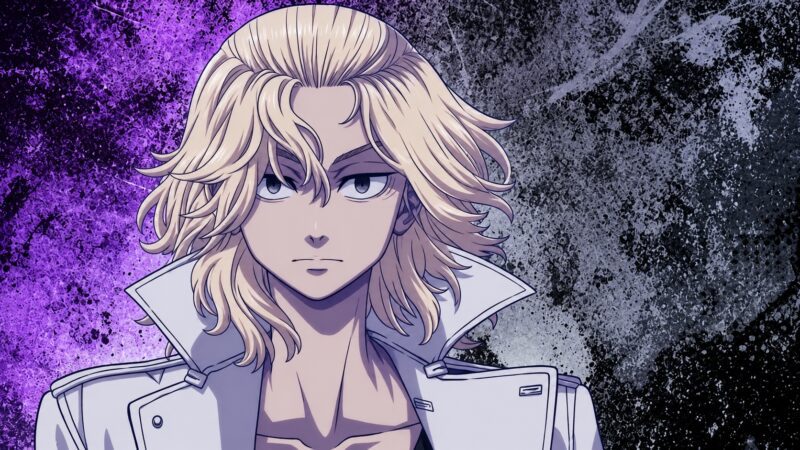
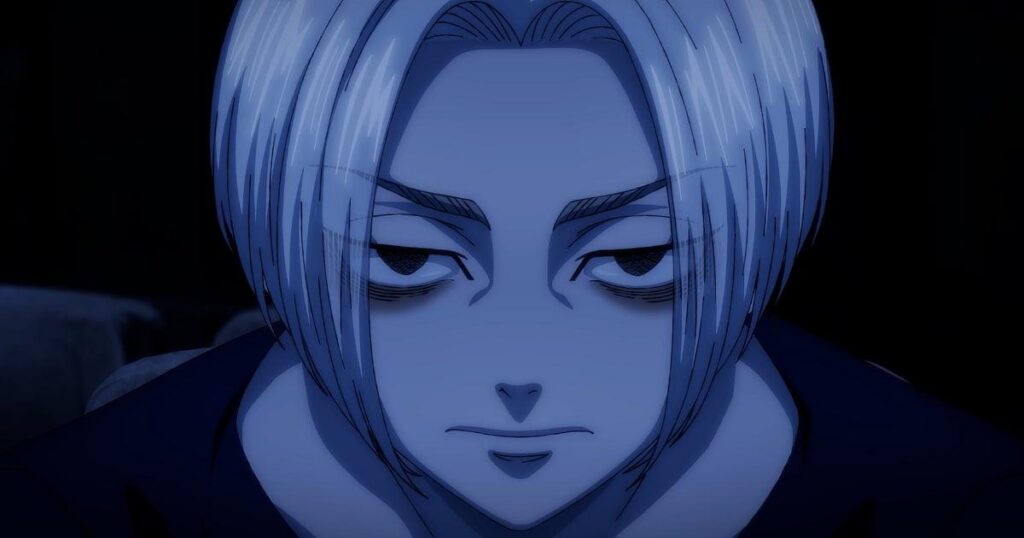
This is Mikey’s Dark Impulses explained as far as Season 4 has taken them: a leader who tried to protect his friends by leaving them, then became more dangerous without them. Through Episode 7 (overall Episode 57), the anime has shown the impulses, what they cost and Mikey’s desperate request for help. It has not yet said where they come from. The manga does, and that answer sits in a marked spoiler section near the end.
Mikey’s Dark Impulses Explained: What the Videotape Confirms
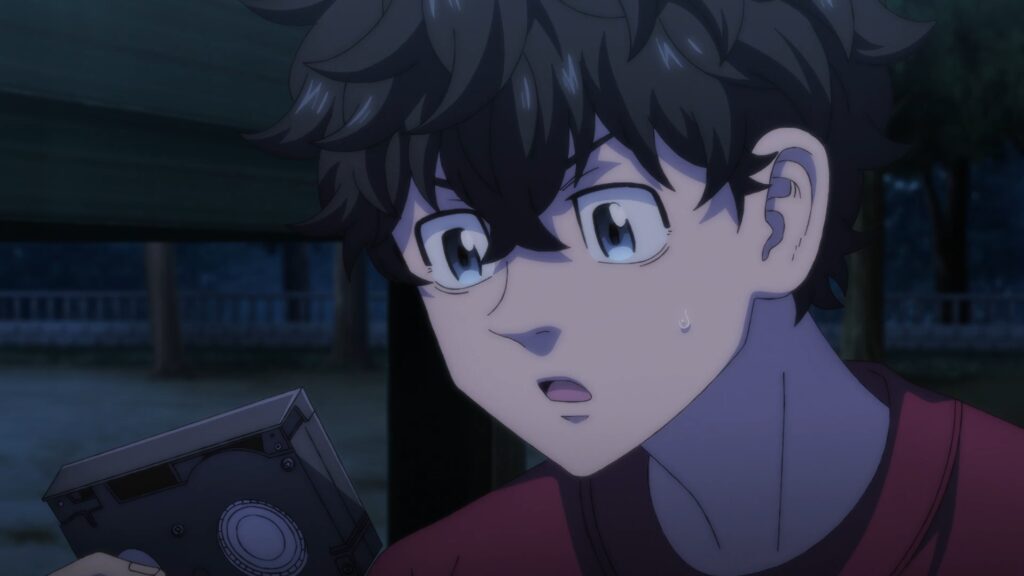
The strongest anime evidence arrives in Episode 4, “Give Me a Hand” (overall Episode 54). Takemichi finds a videotape Mikey secretly left in the Toman time capsule, addressed to Takemichi twelve years in the future. The official Episode 54 synopsis supports four points. Mikey has lived with uncontrollable violent impulses for years. Shinichiro, Emma and Baji helped him keep them in check. All three are dead. And Mikey has separated himself from Toman so his darkness cannot hurt the friends he has left.
That changes how his earlier behaviour reads. Before the tape, grief and gang violence were the obvious explanations for his transformation. The tape shows that Mikey himself recognises something dangerous in him and fears losing control. It also shows that his closest relationships did more than keep him company: they helped him regulate himself.
What he wants from Takemichi is just as revealing. Mikey asks him to stay away from his future self, not to attempt another time leap to rescue him, and to enjoy the happiness he has found. He is not recruiting an ally or asking for protection. He is asking to be left behind.
The tape has limits. The anime has shown the behaviour and its consequences but not the underlying cause, and nothing in Season 4 presents the impulses as a recognisable medical condition. The aired evidence supports a dangerous, unexplained problem shaped by grief and isolation, and no more than that.
Why Breaking Up Toman Looks Different in Hindsight
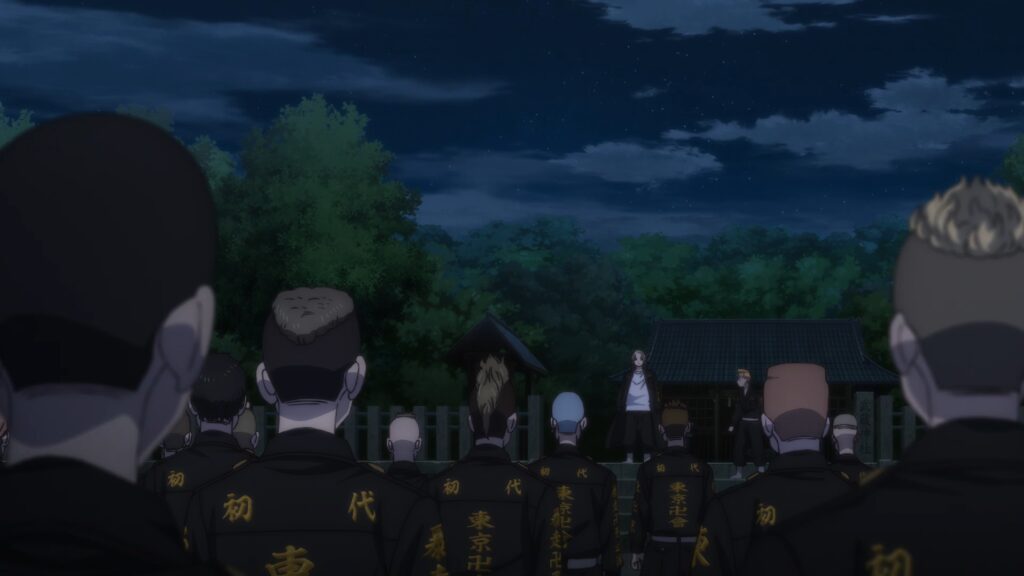
In Episode 1, after the defeat of Tenjiku, Takemichi finally tells Mikey about his time leaping, and Mikey responds by dissolving the Tokyo Manji Gang. Episode 2 makes that look like an ending. Toman’s former members bury the time capsule and promise to reunite twelve years later, and Takemichi returns to 2018 to find his friends happier. He and Hinata are preparing to marry. Mikey is absent.
Episode 4 recasts that happy ending. With the videotape in hand, the dissolution reads as Mikey deliberately giving up his relationships to keep others safe. That is a retrospective interpretation rather than something Episode 1 states, but the tape supports it, and it explains why the future that makes everyone else happy has no place for him.
Bonten Is What Isolation Costs
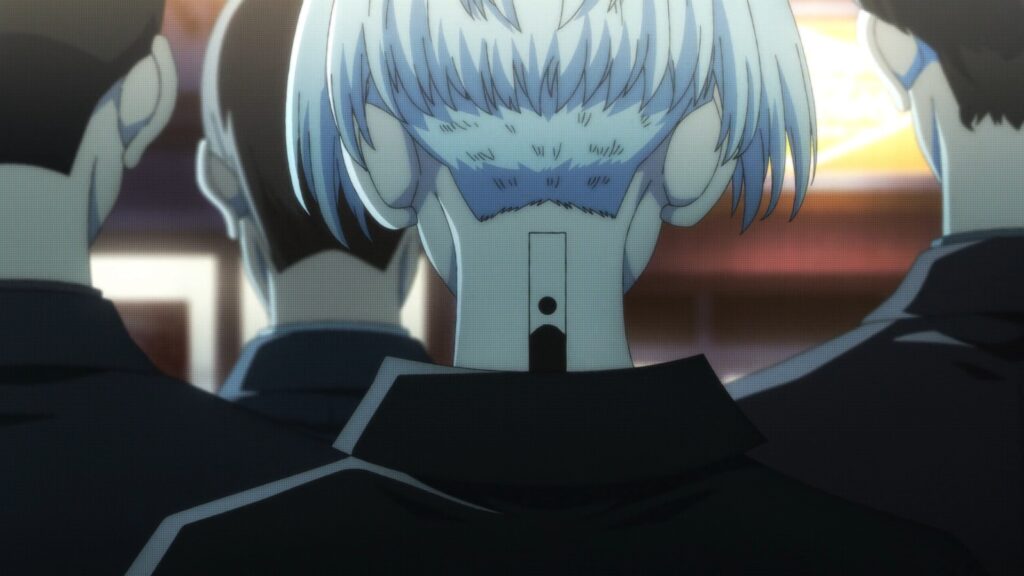
Episode 3 (overall Episode 53) shows the price. In 2018, Bonten is a powerful criminal organisation, more ruthless than the old Tokyo Manji Gang, and Takemichi discovers that Mikey leads it. Toman grew out of childhood friendship, with Mikey surrounded by trusted companions. Bonten is an organised syndicate, and Mikey is separated from his former friends.
The anime establishes the organisation and Mikey’s leadership. Reading Bonten as the endpoint of his isolation is interpretation, though Episode 4 makes it hard to avoid. One practical detail raises the stakes: Takemichi can no longer use Naoto to return to the past, because Naoto has already achieved the future he wanted for Hinata. His familiar method of saving Mikey is gone.
The Invincible Mikey Who Could Not Ask for Help
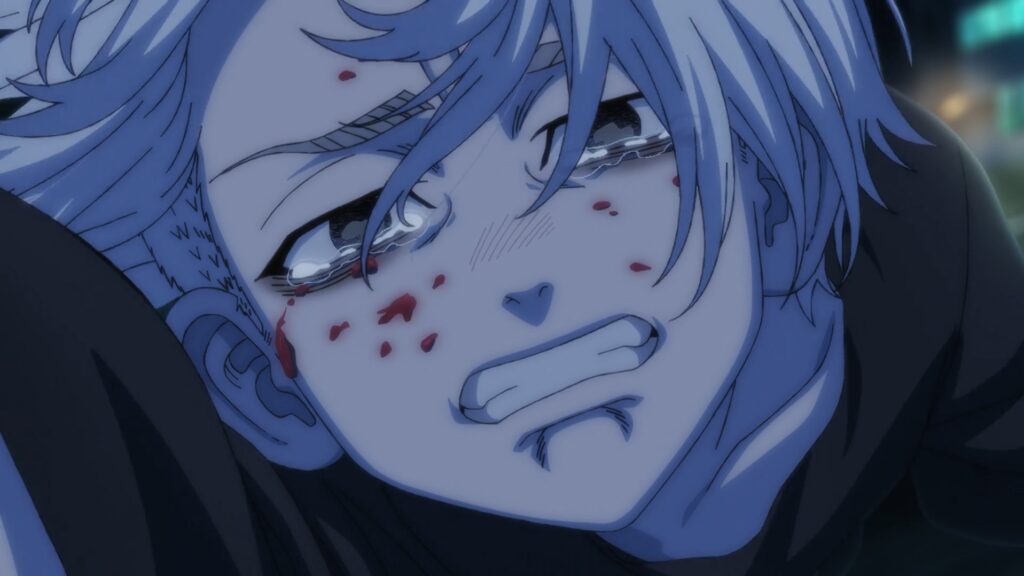
Mikey is admired for his fighting ability and the confidence he inspires. That reputation sets up a contradiction: others expect him to protect them, while he struggles to admit that he needs protection himself. This is an interpretation of his characterisation, not a mechanism the anime defines, but the rooftop scenes make it difficult to ignore.
After Takemichi meets Bonten era Mikey and Sanzu, he insists that Mikey deserves happiness too. Mikey answers by shooting him. Later, Mikey goes to a rooftop and jumps. Seriously wounded, Takemichi reaches out and catches his hand, refusing to let go, and Mikey finally asks for help. The sequence runs across the end of Episode 4 and into Episode 5 (overall Episodes 54 and 55).
Each moment shows a different side of him. The shooting shows that his impulses can endanger someone he cares about. The jump shows despair and an inability to imagine another way out. The plea shows that his attachment never fully disappeared, and it contradicts the isolation he imposed on himself. The hand is hard to miss as a motif: the episode is titled “Give Me a Hand,” and coverage of the season’s ending, Trick Star by go!go!vanillas, highlighted an image of a hand reaching toward Mikey as darkness consumes him.
The rooftop does not suggest that friendship cures him. What changes is that Mikey lets someone see his vulnerability instead of being asked to stay strong. Understanding that is not the same as excusing what he does. The anime explains why he is dangerous without removing his responsibility for the violence.
Two individual responses are worth noting. An October 26 Anime Fire review praised the emotional storytelling while questioning how Mikey’s condition would be developed, and an October 24 r/TokyoRevengers discussion praised the ominous soundtrack around Mikey and Sanzu’s appearance. Neither measures the wider audience.
Why Mikey Becomes Takemichi’s New Reason to Leap
Contact between the two sets off a new time leap in Episode 5, this time ten years back, from 2018 to 2008, two years after Toman’s dissolution. Tokyo is now divided among three organisations: Kanto Manji, led by Mikey; Brahman, led by Senju Kawaragi; and Rokuhara Tandai, led by South Terano. Takemichi’s original mission was to save Hinata. His renewed journey is built around saving Mikey, and the two now share a desire to change the future.
Episodes 6 and 7 widen the mission. Takemichi declares his intention to defeat Mikey, agrees to cooperate with Senju, and experiences a new kind of vision involving a critically injured Senju. The Three Deities conflict has been introduced, but the full battle and the ultimate origin of the impulses have not been shown.
What the Manga Says About the Origin
This Part contains major spoilers of Tokyo Revengers manga..
Chapter 274, “No Holding Back,” holds the key explanation. Mikey says his Dark Impulses are tied to a curse that originates from Shinichiro killing the previous time leaper, and he believes it has affected people around him as well, including events surrounding Kazutora and Shinichiro’s death. Chapters 268 to 273 reveal that Shinichiro was himself a time leaper who killed a man with that ability to obtain the power. Kodansha’s description of Volume 31 separately confirms that the concluding volume reveals the nature of the Dark Impulses and their connection to time leaping.
So the manga adds a supernatural layer to the psychological one the anime has already built. The two should stay distinct: the manga assigns the curse to Shinichiro’s actions, not to Mikey’s grief. Its resolution in Chapters 274 to 278 is also tied to the series’ supernatural premise rather than to counselling or willpower, though Takemichi keeps reaching for Mikey even when Mikey is at his most dangerous.
What Season 4 Has Established
The anime answers the human question first. Mikey’s Dark Impulses are a violent force he cannot fully control, sharpened by grief and isolation, and his response was to leave the people who might have steadied him. That made him more dangerous, not safer. He is not an ordinary villain who stopped caring; he stays attached to his friends while harming himself and others. The manga’s later answer adds a cause without erasing that human tragedy.