
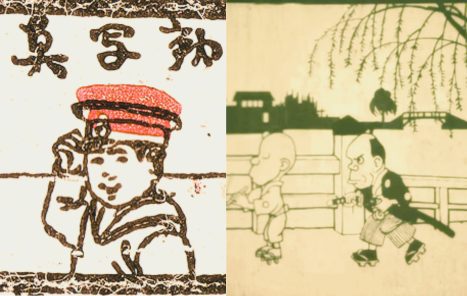
Most people discover anime through a specific series — a friend’s recommendation, a late-night streaming session, or a scene that stops them mid-scroll. Very few stop to ask where any of it actually came from. The answer stretches back over a century, through silent films, wartime propaganda, a single revolutionary television series, and a decades-long push toward global recognition that is still ongoing today.
This is the real origin story of anime — not the sanitized version, but the full picture.
Before Animation: Japan’s Visual Storytelling Roots
The foundations of anime were not laid in a film studio. They were laid centuries earlier.
Before film, Japan already had several forms of entertainment based on storytelling and images. Emakimono — picture scrolls common in the eleventh century — were unrolled from right to left as traveling storytellers narrated legends and anecdotes, functioning like a moving panorama. Kagee, a form of shadow play derived from Chinese tradition, was popular during the Edo period. Magic lanterns from the Netherlands were also popular in the eighteenth century. The paper play known as kamishibai surged in popularity during the twelfth century and remained a fixture of street theater until the 1930s. Puppets of the bunraku theater and ukiyo-e woodblock prints are considered direct precursors of Japanese animated characters.
These traditions established something important: Japanese audiences had a long cultural relationship with sequential visual storytelling before a single frame of animation was ever produced.
1907–1917: The Earliest Experiments
The question of when Japanese animation actually began does not have a clean answer.
The earliest piece of Japanese animation found to date is from approximately 1907 — a short filmstrip called Katsudō Shashin, discovered in 2005. It is only three seconds long and consists of fifty frames showing a boy in a sailor suit drawing characters and bowing. Its creator remains unknown. It may not have been made for any commercial or artistic purpose at all — but it exists, and it predates everything else by a decade.
Japan began producing animation formally in 1917 — still the age of silent films — through trial-and-error drawing and cutout animation techniques, drawing from animated shorts produced in France and the United States. Three pioneers emerged as the defining figures of this era: Ōten Shimokawa, Junichi Kōuchi, and Seitaro Kitayama — often called the fathers of anime — who combined Western techniques with traditional Japanese art.
The oldest surviving example of Japanese animation from this period is Namakura Gatana (Blunt Sword), dating to 1917, made with chalk and running less than five minutes. Most other work from this era was lost — the Great Kanto Earthquake of 1923 destroyed many early studios and their films, making this period difficult to study comprehensively.
These pioneers worked with almost no resources. They were competing with foreign companies like Disney, who were selling already-profitable products abroad and could afford cel animation, while Japanese studios were still using cutout animation to save money. The medium survived its early years largely through stubbornness.
The 1930s–1945: Wartime and Propaganda
The path from experimental short films to a genuine industry ran directly through World War II — and not in a flattering way.
Due to the rise of Japanese nationalism and the start of WWII, most animated productions from the 1930s onward were not popular entertainments but instead were either commercially-oriented or government propaganda. A law passed in 1939 required the film industry to follow government regulations and interests, leading animation studios to produce films showcasing Japanese military success.
The most significant production of this era was Momotarō: Umi no Shinpei, released in 1945 — a propagandistic film produced by the Japanese navy, designed to lift wartime morale and commitment to the war effort. It is widely recognized as Japan’s first feature-length animated film. Its existence is historically important, but its purpose was entirely political.
The war ended. And the industry that emerged from the wreckage looked nothing like what came before.
1948–1962: Rebuilding and the Road to Television
It was not until 1948 that the first modern Japanese animation production company devoted to entertainment came into being: Toei. This moment marks the true beginning of anime as a commercial creative industry rather than a propaganda tool or experimental medium.
In 1958, Toei released Hakujaden — known in English as The Tale of the White Serpent — which was later released in the United States in 1961. It was Japan’s first color feature-length anime film and a significant step toward international recognition.
By the late 1950s, a manga artist named Osamu Tezuka had become extraordinarily popular in Japan. Today he is reverentially referred to as the “God of Manga.” His work with Toei during this period laid the creative groundwork for what was about to happen.
1963: Astro Boy Changes Everything
If there is a single moment that defines the modern identity of anime, it is the 1963 television debut of Astro Boy — Tezuka’s most beloved creation.
Astro Boy was highly influential to other anime in the 1960s and was followed by a large number of anime about robots and space. Tezuka’s studio Mushi Pro met success with titles such as Kimba the White Lion in 1965. What is noted as the first magical girl anime, Sally the Witch, began broadcasting in 1966. Speed Racer debuted in 1967 and was brought to the West with great success.
Astro Boy introduced a cost-efficient animation style designed specifically for television — a practical approach born from budget constraints that paradoxically helped define anime’s visual language. The limited animation techniques Tezuka developed became the foundation on which an entire industry was built.
Merchandising became entrenched as part of the basic business model for all television anime that followed. The most popular genres dealt with science fiction and space, followed by shows about girls with magical powers.
The 1970s–1980s: Identity, OVAs, and Studio Ghibli
The 1970s saw anime begin to separate from its Western influences and develop its own distinct identity.
One of the earliest successful television productions of the early 1970s was Tomorrow’s Joe — a boxing anime that became iconic in Japan. 1971 saw the first installment of Lupin III. The second series, starting in 1977, saw considerably more success, spanning 155 episodes. Mazinger Z defined the mecha genre. Space Battleship Yamato became a cultural phenomenon that demonstrated anime’s capacity for serialized, emotionally complex storytelling.
The 1980s brought two transformative developments. The first was home video.
Home video transformed the anime industry in the 1980s even more radically than television had. It allowed casual re-watching and created a new submarket — the OVA (Original Animated Video) — a shorter work created directly for video, often featuring higher production values and more experimental storytelling.
The second was Studio Ghibli. Former Toei animator Hayao Miyazaki and his colleague Isao Takahata established Studio Ghibli in the wake of the success of their theatrical film Nausicaä of the Valley of the Wind. The studio would go on to redefine what animated films could achieve — not just in Japan, but globally.
The 1990s: Anime Goes Global
The 1990s marked the period when anime truly broke through into mainstream international consciousness. Several blockbuster franchises — Dragon Ball Z, Sailor Moon, and later Pokémon — became global phenomena, captivating young audiences worldwide through television syndication and massive merchandising campaigns.
In the early 1990s, when anime was first starting to become popular internationally, dubbing was rare. Many fans would translate shows themselves and post them online — these are called fansubs. This trend continued until September 2, 2001, when Cowboy Bebop first aired on Adult Swim and became the first anime broadcast on live television in the United States.
Neon Genesis Evangelion, released in 1995, redefined what anime could do narratively and psychologically — and its influence on the medium and on broader pop culture continues to the present day.
The 2000s Onward: A Legitimate Global Art Form
In the early 2000s, anime was flourishing. Long-runners like One Piece, Naruto, and Bleach cross-promoted manga sales, movies, video games, and merchandise. Overseas licensing boomed.
Studio Ghibli’s Spirited Away won the Academy Award for Best Animated Feature at the 75th Oscar ceremony in 2003 — the first anime film to win the award. Ghost in the Shell 2: Innocence was selected for competition at the Cannes Film Festival in 2004.
Most anime studios completed the transition to digital animation by approximately 2005. The last major holdout was Eiken’s Sazae-san — the longest-running animated series in the world — which finally made the switch in 2013.
Today, anime is a genuinely global industry. Streaming platforms like Crunchyroll and Netflix have made it accessible to audiences in every country simultaneously. Series like Attack on Titan, Demon Slayer, and Jujutsu Kaisen have reached viewership numbers that would have been unimaginable even twenty years ago.
Why Anime Survived Everything
Anime should not have made it this far. It began with no money, competing against Disney, losing its earliest works to an earthquake. It was conscripted into wartime propaganda. It relied on overworked animators in underfunded studios. It crossed international borders through unofficial fan translations before any licensing infrastructure existed.
What kept it alive — across every era — was the same thing that keeps it alive now: storytelling that refuses to talk down to its audience. Anime took the full range of human experience seriously when other popular animation formats were still primarily aimed at children. That seriousness of purpose, built into the medium from the beginning, is why it is still here.
Frequently Asked Questions
When was anime invented? The earliest confirmed Japanese animation dates to 1917. A possibly earlier filmstrip called Katsudō Shashin, estimated to be from around 1907, was discovered in 2005, though its origin and creator remain unknown.
Who created the first anime? Three pioneers — Ōten Shimokawa, Junichi Kōuchi, and Seitaro Kitayama — produced the earliest confirmed anime films in 1917 and are widely referred to as the fathers of anime.
What was the first popular anime? Astro Boy, created by Osamu Tezuka and debuting on television in 1963, is widely considered the first anime to achieve genuine popularity and define the modern identity of the medium.
When did anime become popular worldwide? Anime began reaching international mainstream audiences in the 1990s through franchises like Dragon Ball Z, Sailor Moon, and Pokémon. Its global legitimacy was cemented when Spirited Away won the Academy Award for Best Animated Feature in 2003.
What is the oldest surviving anime? The oldest surviving example of Japanese animation is Namakura Gatana (Blunt Sword) from 1917, made with chalk and running under five minutes.
Is anime considered a serious art form? Yes. Anime has been recognized at the highest levels of global film culture, including the Academy Awards and the Cannes Film Festival. It is studied in universities worldwide as both a cultural and artistic medium.
Sources: Wikipedia History of Anime, Nippon.com, LiveAbout, Japan Centric, Open Culture, Eastern Arizona College LibGuides — 2026.