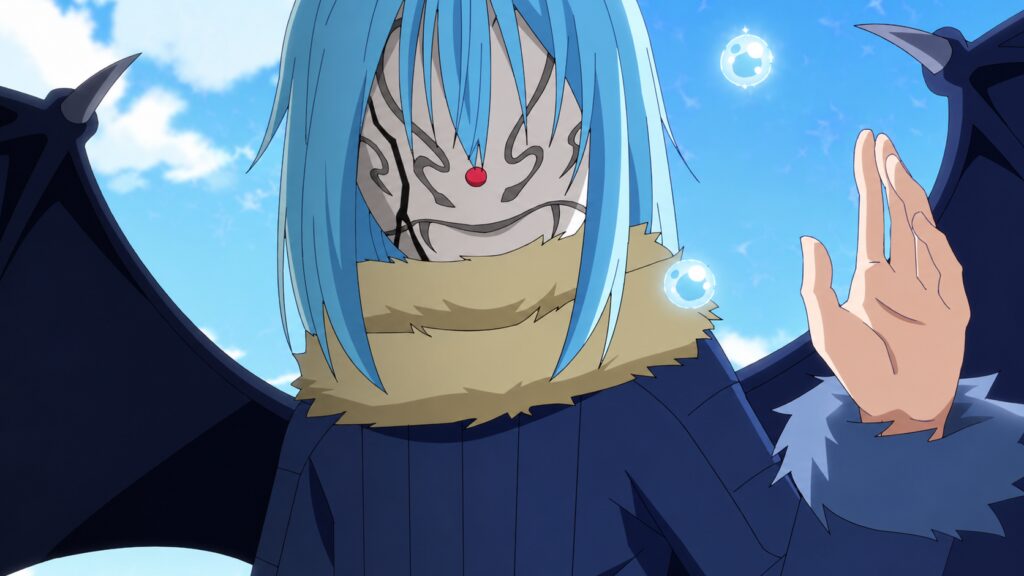
Why do Tensura‘s most powerful characters rarely get satisfying fights? The usual answers, that the battles are too short or that Rimuru is simply overpowered, only go so far. A better one is that the series sets fighters against opponents who are massively outclassed, then cares more about what the fight changes than about the fight itself. When the winner is obvious, suspense has to come from somewhere else. Through its September 2026 episodes of Season 4, the anime shows both what that costs and where it finds the tension anyway.
This is not just a viewer’s impression, because Fuse has described the difficulty himself. In a 2016 interview published by Kodansha, he pointed to Gobta when asked which characters were easiest to write, explaining that weaker characters can lose. Powerful characters such as Rimuru are harder to put in convincing trouble.
A 2018 interview with Fuse and manga artist Taiki Kawakami, published by ComicSpace, goes further. Fuse acknowledged that placing an overwhelmingly powerful protagonist in danger is hard. He said that while revising the story for publication he sometimes realized he had made Rimuru too powerful, and that extremely strong characters raise an obvious question: why not simply use an ability they already have to escape?
His planning has the same effect. In an October 1, 2018 Anime! Anime! interview, Fuse said he assigns approximate combat strength values to characters when working out confrontations, so that outcomes stay believable. He also wanted defeated characters to have their own reasoning and motivations rather than act as disposable opponents.
The side effect is easy to see. When an established gap in ability decides a fight, there is little room to keep the result in doubt. That does not make the fight bad, since a crushing victory can serve characterization, comedy, horror or payoff, but it changes the kind of tension on offer. Nothing in these interviews suggests Fuse wants the fights to disappoint. They describe a genuine writing problem and a set of priorities.
Villains who threaten the story but not Rimuru
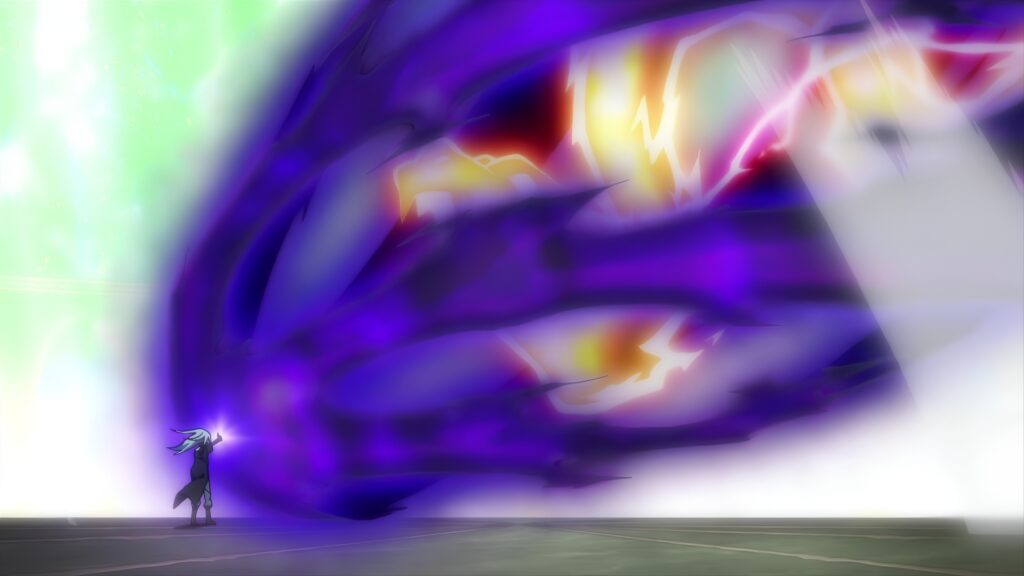
Clayman gets a long runway. In Season 2, Episodes 46 to 48, he tries to turn Walpurgis against Rimuru, Guy Crimson refuses to settle the dispute for him, and he then tries to use Milim against Rimuru. Yet the official Episode 47 synopsis says Clayman and his forces are no match for Rimuru’s side. He awakens using souls he had collected and is still defeated and executed.
Clayman is dangerous because of his schemes, his influence and his willingness to manipulate others. Once those plans unravel and he is forced into direct combat with the newly awakened Rimuru, the gap becomes obvious. A lopsided defeat can still work as a humiliation or a reversal for someone who badly misjudged his opponent, and it pays off Rimuru’s awakening. Whether that payoff makes up for the lack of uncertainty is a fair thing to argue about.
Season 4 repeats the pattern more explicitly. Maribel Rosso opposes Rimuru because their visions for humanity’s future cannot coexist. The official Episode 82 synopsis states that her Unique Skill, Greed, does not work on the awakened Demon Lord Rimuru and that the difference in their abilities is clear. Rimuru neutralizes her attacks before Yuuki intervenes, and Episode 83 confirms that Yuuki kills her. Her political plans make her dangerous, yet her signature ability cannot turn that into a contest.
Diablo works the same way on Tempest’s side. In Season 3, Episode 57, King Edward refuses Diablo’s demand for reconciliation because he believes his Three Battlesages can protect him, and Diablo proceeds to instill fear in the opposition. Fighters introduced as formidable become ineffective against someone far stronger, which is a fair criticism. The counterargument is that the scene is about coercion and the consequences of misjudging Diablo, and the physical fight is only one part of it. In each case, a villain’s threat to the plot and threat in combat turn out to be different things.
When the fight exists to settle something bigger
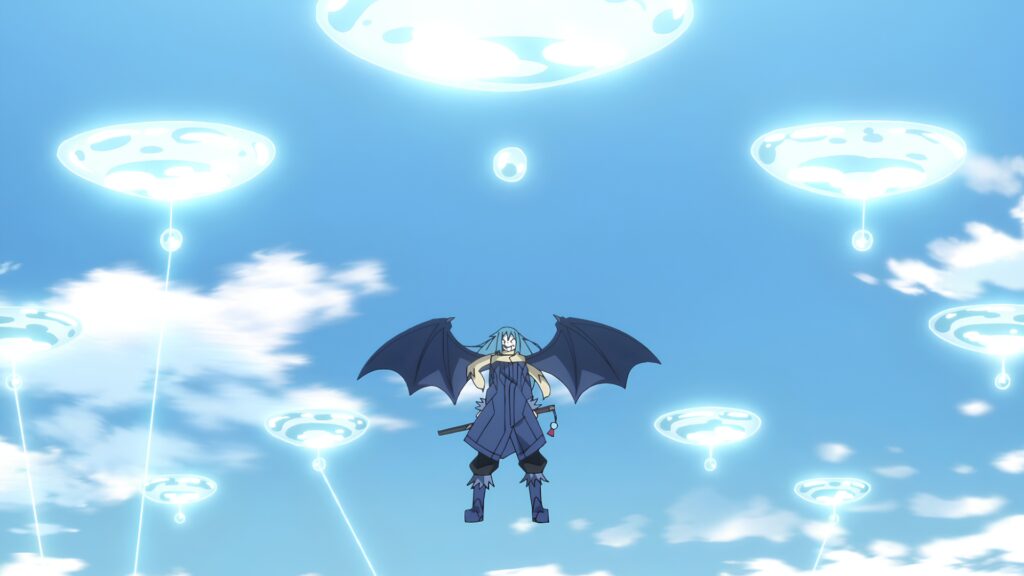
The Falmuth army shows how deliberately the series can trade physical uncertainty for moral weight. In Season 2, Episodes 32 to 35, Rimuru learns after the attack on Tempest and the deaths of his companions that awakening as a True Demon Lord might allow him to revive them. About 20,000 Falmuth troops approach, Episode 34 confirms that Rimuru uses a devastating attack against the army, and Episode 35 connects the harvest of souls to his evolution and his efforts to revive the dead. Nobody asks whether ordinary soldiers can beat Rimuru. The question is what he will do after what Tempest has suffered, and the drama comes from retaliation and the change in a previously more conciliatory protagonist. That makes it a strong counterexample to the idea that lopsided fights are automatically weak.
The people making the series say politics is not an interruption. In a September 2024 interview, Season 3 director Atsushi Nakayama said that skipping the meetings to reach Hinata’s battle and the Founding Festival would fail to represent what Tensura is. He also said he used previsualization techniques to make those scenes less static, a tool he had expected to help mainly with action.
Fuse’s January 22, 2026 interview with Animate Times points the same way. He said he first imagined a reincarnated slime building a village and eventually becoming a Demon Lord, an idea that grew into a much larger story about building a nation. The work also gradually gained a stronger ability battle component than he expected, and he credited his tabletop RPG experience, saying he approached the world’s nations and characters partly as a game master. Tensura’s battles belong to a wider fantasy world with alliances, administration and schemes, rather than a ladder of escalating duels. None of that excuses every disappointing confrontation, though, because the series still builds anticipation around its strongest characters.
THE TEMPEST ASCENSION
A new challenger has entered the Jura Tempest Federation! Face ten questions about Rimuru’s adventures, legendary skills, and fearsome allies. Will you remain an ordinary slime, or ascend to the rank of True Demon Lord?
Does the buildup promise more than the fight delivers?
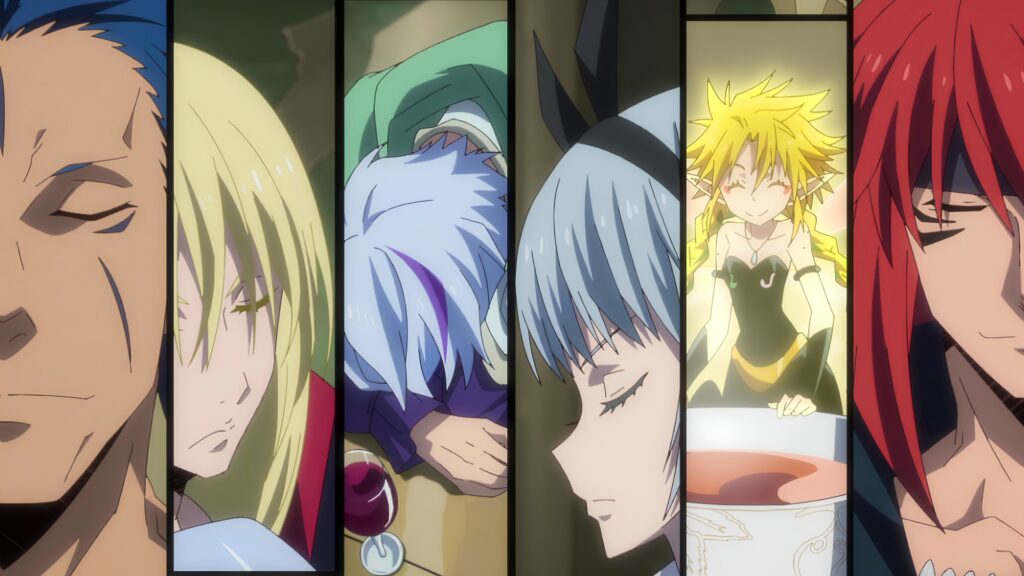
A story full of Demon Lords, True Dragons and extraordinary skills naturally raises hopes of spectacular confrontations. Milim is one of the oldest Demon Lords, known as the Destroyer. Veldora is a True Dragon whose release is a major milestone in Rimuru’s story. Guy Crimson can influence a dispute at Walpurgis through authority alone. Their importance does not depend on how often they fight. The open question is whether the time spent on political preparation is repaid when the fight arrives, and that is less about how many minutes the anime devotes to action than about whether a given battle resolves what it set up. It is a call viewers make episode by episode.
The fights that hold tension
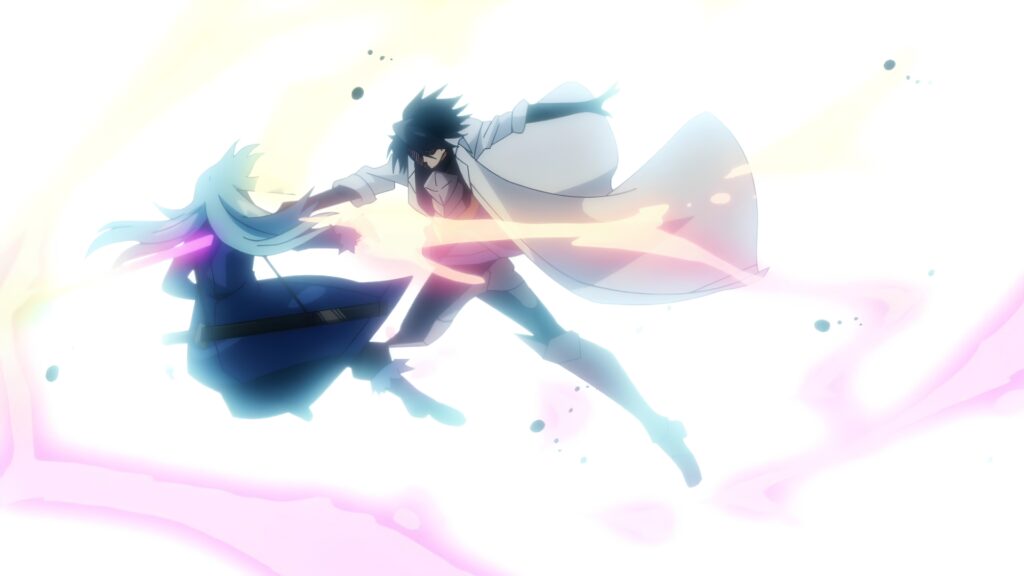
The clearest answer to the problem comes from fights where strength is not enough. In Season 2, Episodes 30 and 31, Hinata’s Holy Field restricts Rimuru’s magic and leaves him struggling to survive, and the official Episode 31 synopsis confirms that he escapes by using a substitute body. She does not need to be stronger than he is. The Holy Field changes the conditions of the fight.
Their later confrontation, in Season 3, Episodes 56 to 59, is more layered. The official Episode 56 synopsis describes Hinata fighting with all her skill and experience while Rimuru responds to her attacks, and Episode 58 brings the conflict toward a conclusion through a challenge involving her Melt Slash. It is not only a contest over who is stronger. It unfolds amid misunderstandings and deliberate interference, and Episode 59 ends in reconciliation and formal diplomatic relations between Tempest and Lubelius.
Season 4 supplies a counterexample of its own. In Episode 95, Shion and Ranga struggle against Razul, who holds a substantial advantage in combat ability; the official character profile describes him as powerful enough to fight Shion and Diablo at the same time. Shion refuses to surrender and her abilities evolve during the fight. That gives the story natural room for struggle, adaptation and an earned breakthrough, and it shows the series has not abandoned difficult battles.
(light novel spoilers ahead!)
Beyond the anime
The light novels also contain conflicts that Rimuru’s existing strength cannot simply settle, and these go beyond what the anime has aired through September 2026. Yen Press confirms that in Volume 15 Veldora is captured after his confrontation with Velgrynd and Rimuru must evolve further to rescue him. Its Volume 20 synopsis has Velzard dramatically shifting an ongoing battle and Rimuru forced to intervene when Milim begins rampaging. The Japanese main story concluded with Volume 23 in November 2025, and the publisher’s description emphasizes a large scale final conflict and desperate battles.
Power changes the kind of tension
So the problem is narrower than “Tensura has no good fights.” A series that builds confrontations around established gaps in ability leaves little doubt about the result, and a series that cares about nations, alliances and consequences often treats a fight as the place where a larger question gets answered. That can produce memorable moments, as Falmuth does, and it can leave villains like Clayman and Maribel feeling more threatening in the council room than on the battlefield. The fights that hold the most suspense, Hinata’s Holy Field and Shion against Razul, give a strong character a problem that force cannot immediately solve. Those cases are exceptions rather than the rule, and whether the rule or the exceptions define Tensura’s fights is for each viewer to judge.