There is a specific kind of grief in being told you cannot access something you love. Not because you are unworthy. Because someone decided, long before you were born, that people like you should not have it. Witch Hat Atelier understands that feeling better than most fantasy anime ever attempt to. This witch hat atelier season 1 review arrives at the end of a 13 episode run that consistently delivered on a premise that looked, on paper, almost impossibly delicate to adapt.
The setup is simple on the surface: magic is real, magic is a craft, and the people in power want you to believe it belongs only to the few. A girl named Coco learns the truth by accident, and what the truth costs her is immediate and irreversible.
BUG FILMS, the studio behind this adaptation, came into the project carrying reputational damage from the Zom 100 production disaster. Fans were cautious, and reasonably so. Producer Hiroaki Kojima confirmed in January 2026 that all 13 episodes were fully completed before broadcast began. That decision is visible in every frame.
What Is Witch Hat Atelier About?
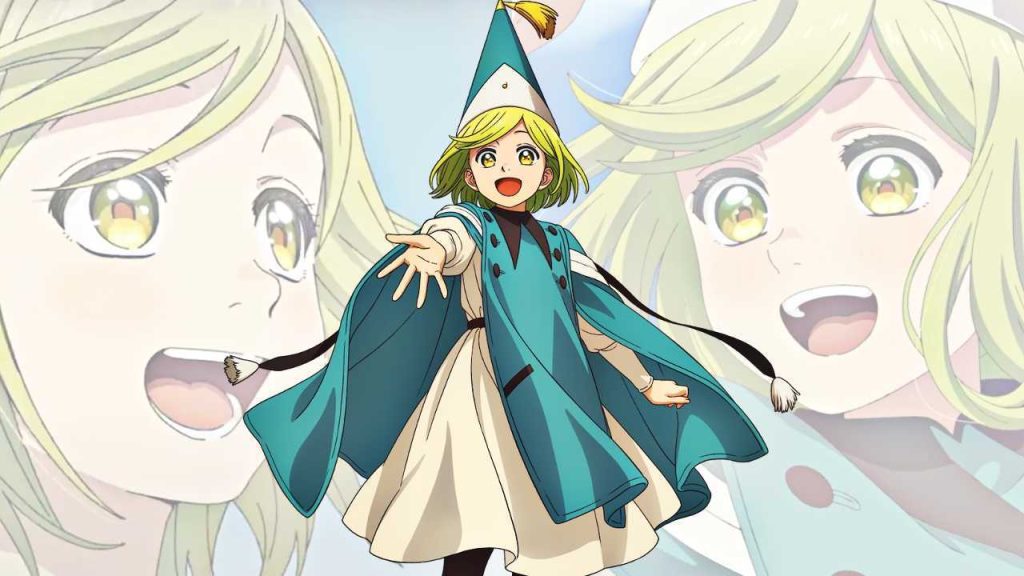
Coco is a dressmaker’s daughter who has always wanted to become a witch. In her world, magic is believed to be an innate gift: you are either born with the ability or you are not. She is not. Then she watches the traveling witch Qifrey trace a precise circle of symbols and sees the world respond to ink on a surface, and she realizes the truth her society has buried for generations.
Magic is learned. Anyone who knows how to draw the correct sigil in the correct ink can do it.
The accident that follows encases her mother in crystal. Qifrey, who is tracking a faction of rogue witches called the Brimmed Caps for reasons he does not immediately disclose, takes Coco as his apprentice to shield her from having her memory erased by the institutional witches who protect the secret. She joins his atelier alongside three other girls: the fiercely competitive and anxious Agott, the warm and perceptive Tetia, and the quiet, deeply observant Richeh.
This is not a story about defeating evil. It is about living inside a broken system while trying to become someone worth being.
Story, Pacing, and Whether 13 Episodes Hold Up
Season 1 of the witch hat atelier anime covers the early arcs of Kamome Shirahama’s manga: Coco’s entry into the atelier, the four apprentices learning together, their first formal examination in the broader world of witches, and initial confrontations with the Brimmed Caps.
What the season handles well is patience. The magic system is built slowly. The world’s rules accumulate through experience rather than explanation. You understand what memory erasure means before anyone defines it, because the show gives you context first. That restraint is unusual in modern anime and it pays off in full.
The middle stretch is where the pacing strains. Roughly episodes four through seven compress material that had more room to breathe in the source manga. Director Ayumu Watanabe acknowledged the challenge directly, noting that “when adapting to the TV anime format, there are inevitably times when the length is insufficient.” Certain emotional beats arrive slightly compressed. Some quieter character moments that would land harder with more space become brief glances instead.
The final arc recovers well. The season ends with questions open rather than forced into false resolutions, which is the correct choice for a story this layered. But the constraint is honest to name. Thirteen episodes was not quite enough room for everything this story wanted to do.
The Visual Achievement and Production Team
Before anything else: BUG FILMS’ redemption is real.
Witch Hat Atelier Season 1: Production Lineup
- Animation Studio: BUG FILMS (entered this project with skepticism around them after the Zom 100 collapse; left having genuinely rebuilt their credibility)
- Director: Ayumu Watanabe, known for the Ace Attorney anime and Doraemon films; his restrained, observational approach suits this material exactly
- Script and Series Composition: Hiroshi Seko, who described the series as “a finely crafted dish made with fresh, nourishing ingredients and prepared with great care”
- Character Design and Chief Animation Direction: Kairi Unabara (Pokémon Evolutions; visual consistency across all 13 episodes is a direct credit to this role)
- Score and Soundtrack: Yuka Kitamura, who composed the Elden Ring soundtrack; the fact that BUG FILMS hired someone with that credential tells you how seriously they approached the tonal assignment
- Sound Direction: Kisuke Koizumi
- Total Production Period: Approximately 3.5 years; delayed from a planned 2025 release so the creator could, in Kojima’s words, “present the charm of the project at an even higher quality”
The backgrounds are rich in the way children’s book illustration is rich: dense, layered, and built with the logic of places that actually existed. Every workshop, every market road, every forest path has texture you want to stay inside. The spell circles unfurl across the screen like illuminated manuscript pages coming to life, animated to show the act of drawing itself rather than simply the finished result. That one decision is a thesis statement about how this adaptation was approached.
The visual comparisons critics have drawn to Art Nouveau and classic illustration are accurate. This does not look like conventional anime. The clothes carry physical weight. Characters have distinct physical presence. The color choices are warm without being soft. Kairi Unabara’s character designs carry the manga’s emotional expressiveness into motion, and maintaining Shirahama’s distinctive visual register in animation was a real technical challenge that this production met.
Characters That Actually Feel Like People
Coco is not the chosen one. She is not special by bloodline. She is curious and determined and she sometimes makes things worse by trying too hard to fix them. Her moral clarity, the refusal to become cynical even when confronting systematic injustice, is the actual engine of the series. She does not argue policy. She cries for people. That is what makes her worth following for 13 episodes.
Qifrey is the most interesting character in witch hat atelier by a comfortable margin. He is genuinely warm and attentive: he kneels to meet his students at eye level, he asks what they want rather than just what they need, he allows failure within safe limits. He also has a hidden agenda tied to his own history with forbidden magic that the season only partially reveals. He is not a Gandalf figure. He is an adult who has been hurt by the system he operates within and has not resolved what to do about that. His complexity feels earned rather than written in from the outside.
Agott is the second standout. Her initial hostility toward Coco is not cruelty. It is fear. Fear of being outpaced, of failing in a world where failure can permanently change who you are. Watching that rigidity bend without fully breaking is one of the season’s quietest achievements.
Tetia and Richeh have smaller arcs in Season 1 but both feel like complete people. The ensemble works because Watanabe’s direction lets these four girls disagree, misread each other, and grow without forcing any of it.
Voice Performances Worth Knowing
Japanese cast:
- Coco: Rena Motomura, who described her reaction to being cast with visible emotion; that investment is audible throughout
- Qifrey: Natsuki Hanae, bringing the gentle melancholy and underlying mystery the character requires
- Agott: Hibiku Yamamura, who conveyed competitive brittleness without making Agott purely antagonistic
The English dub received a same-day Crunchyroll release, which reflects the platform’s confidence in this production. Joshua A. Waters as Qifrey received particular critical praise, with reviewers noting the “warm, encouraging, and often frightening” quality his performance adds to the character. Anjali Kunapaneni’s Coco stays grounded rather than tipping into sentimentality. Several cast members, including Nerida Bronwen and Marilyn Setu, made their anime debuts in this production according to session notes from the recording process.
The Score and What Silence Can Do
Yuka Kitamura composed the soundtrack. Her previous work includes Elden Ring. She knows how to make something sound both ancient and present, and she knows when to hold back.
The Witch Hat Atelier score is orchestral, warm, and placed with precision. Quieter scenes in the atelier have music that feels like light through a window, not music that tells you how to feel. Confrontation sequences with the Brimmed Caps carry weight without melodrama.
What stands out in Kisuke Koizumi’s sound direction is the deployment of silence. The crystallization scene involving Coco’s mother uses quiet in a way that lands harder than any score cue could. Several of the memory-related sequences have similar restraint. The opening and ending themes fit the series without trying to define it. That is a more specific accomplishment than it sounds.
The Moral Trap at the Heart of the Story
The central conflict in Witch Hat Atelier Season 1 is not good versus evil. It is two imperfect systems in collision.
The Pointed Caps, the institutional witches who control all magical knowledge, established their rules after centuries of genuine catastrophe. Unrestricted magic broke the world. The Day of the Pact was the compromise that stopped the destruction. The price was enormous: memory erasure as enforcement with no trial, no healing magic permitted, the institutional lie that only born witches can access magic maintained by force. The system works at the cost of the people inside it.
The Brimmed Caps reject this entirely. They believe access to knowledge is a fundamental right. They are not entirely wrong. They are also not offering safety in return.
Coco exists at the center of this because her existence proves the system’s foundation is false. She should not be able to do magic, according to the institutional logic. She can. The season does not let her resolve the ideological problem she represents. It lets it sit with her, and with the audience.
The teaching dimension is where the story gets genuinely interesting. Qifrey does not lecture. He asks questions. He allows failure within safe limits. In a world that uses memory erasure to enforce conformity, his pedagogy is a form of resistance even before his more explicit conflicts with the system become visible. Watanabe noted in production interviews that he wanted the atelier to feel like a gathering of “real friends,” and the staging of the classroom dynamics reflects that intention.
Identity runs through every character arc. Agott is trying to be the person the system values. Richeh is rejecting what is expected of her. Coco is becoming someone she was told could never exist. The series makes a quiet and consistent argument that identity is built through practice and community rather than assigned at birth.
Witch Hat Atelier as a Genre Piece
Cozy fantasy with genuine stakes is underserved in anime. Witch Hat Atelier sits alongside Dungeon Meshi and Ancient Magus’ Bride in that space, but it has its own texture. The warmth here is not the absence of danger. Several things that happen in Season 1 are genuinely irreversible. The tonal balance maintained across 13 episodes is a specific craft achievement.
The season does not attempt a genre shift. It deepens inside its register rather than expanding outward. By episode ten, the world feels substantially larger than it did in episode one, and the show has not changed what it fundamentally is.
The Harry Potter comparison appears in almost every major review, and it is worth engaging with directly. The magic is learned, not inherited (a rejection of bloodline logic). The mentor is kind but agenda-driven rather than omniscient. The system is morally gray rather than straightforwardly corrupt. Diversity is structural rather than decorative. The protagonist’s curiosity drives the story rather than a prophecy. In the context of J.K. Rowling’s public controversies and the 2026 HBO reboot, the fact that Witch Hat Atelier offers something so structurally and morally different feels both timely and substantive.
Adaptation Quality: Did the Anime Do Kamome Shirahama’s Manga Justice?
This is where the real conversation lives, and it deserves an honest answer rather than diplomatic hedging.
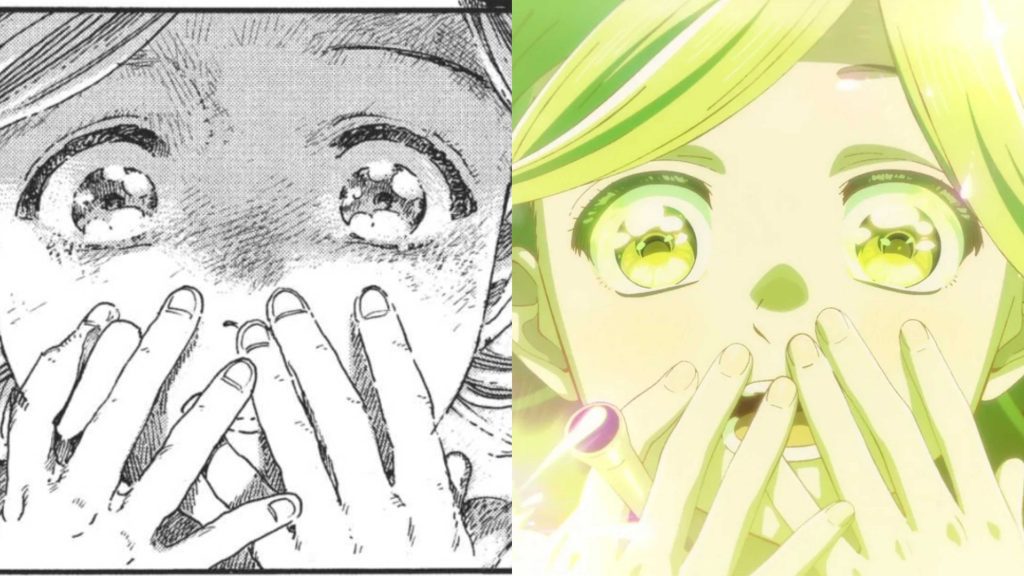
Kamome Shirahama’s manga, which has been serialized in Kodansha’s Morning Two since July 2016 and has accumulated over 7.5 million copies in circulation across 16 collected volumes, is among the most visually intricate works in modern comics. It has won the Harvey Award for Best Manga twice, in 2020 and 2025, and the Eisner Award for Best U.S. Edition of International Material. Her spell circles, architectural details, and fabric rendering are built from thousands of individual lines that carry meaning beyond decoration. The density of her pages creates a reading experience that feels almost ritualistic. You slow down because the page demands it. The visual complexity is not decoration. It is load-bearing structure.
The anime cannot replicate that static density. That is not a failure. It is a different medium with different tools.
What BUG FILMS did instead was find what animation can do that the manga cannot: it made the magic move. When a spell circle unfurls on screen, you watch the ink flow across the surface in real time. There is something genuinely compelling about seeing the drawing process animated rather than presenting only the finished sigil. The kinetic quality replaces a portion of what is lost in line density. It does not replace everything, but it is a translation rather than a retreat.
What the anime cannot fully replace is contemplative time. Shirahama’s layouts breathe. A reader can spend as long as they want with a single expression or a corner of a background. The anime, bound by runtime, has to move forward. Some of the quieter moments that make certain manga chapters feel heavy become brief transitions on screen.
Producer Kojima’s comment about a potential director’s cut deserves to be taken seriously. He confirmed that “quite a few scenes that we went as far as animating” were cut during episode one’s edit, and he noted he hoped they could be released eventually. If that version materializes, manga readers should find it without hesitation.
Here is my actual position on this: BUG FILMS did not replicate Kamome Shirahama’s manga, because no anime adaptation of this material could or should. What they produced is a serious, visually thoughtful, emotionally faithful version of the story with its own strengths and its own losses. For new audiences, the anime is more than enough. For manga readers, it is a companion worth having rather than a replacement to be suspicious of. The real test was whether the production team understood what made the source material worth adapting in the first place. They clearly did.
Should You Watch Witch Hat Atelier Season 1?
Watch it if:
- You want a fantasy series where the magic system has internal logic and real consequences
- You are tired of chosen-one protagonists and want a lead who earned her place through curiosity and work
- You appreciate ensemble casts where characters feel like people rather than archetypes
- Moral ambiguity interests you more than clear heroes and clear villains
- You care about animation that treats the visual medium as a storytelling tool
Consider waiting if:
- You need high-energy pacing and action sequences from episode one
- Slower, episodic rhythms do not hold your attention over 13 episodes
- You specifically want a season that resolves cleanly by the finale
Witch Hat Atelier Season 1 Review: Final Verdict
Spring 2026 had real competition. This was still one of the clearest achievements of the season.
BUG FILMS’ comeback is visible on screen across all 13 episodes. The visual consistency is not coincidental: the completed-before-broadcast model is what responsible production looks like in practice, and the result is an anime that never stumbles in quality at any visible point.
The pacing has legitimate weaknesses in the middle stretch. The 13-episode constraint forced compression that the material did not fully absorb. Coco can tip toward idealistic in ways that test patience. These criticisms are fair.
They do not change what the series accomplishes. The themes are handled with intelligence and without announcement. The characters have texture. The world is built through experience rather than exposition. The score enhances without overrunning. The adaptation choices reflect genuine respect for the source material.
The Witch Hat Atelier anime holds a MAL score of approximately 8.60 and ranked around 115 on the platform as of late June 2026. It was nominated for Best Anime Series at the 6th Astra TV Awards. Both of those reflect what the series earned.
Final Score: 8.5 / 10
One of 2026’s best anime: not despite its constraints, but within them.
Is Witch Hat Atelier worth watching if you have never read the manga?
Yes, without reservation. The anime works as a complete standalone experience. The world is built clearly enough that new viewers will not feel lost, the magic system is explained through action rather than exposition, and the four apprentices are well established by the end of the season. The differences from the manga are unlikely to be noticeable unless you actively compare them.
Who is Qifrey in Witch Hat Atelier and why do fans love him so much?
Qifrey is the traveling witch who takes Coco as his apprentice after her accidental use of forbidden magic. Fans respond to him because he breaks the standard mentor archetype entirely: he is genuinely warm, attentive to his students’ emotional lives, and clearly carrying his own hidden history with the rogue witch faction known as the Brimmed Caps. He is morally complex in a way that makes the audience watch him as carefully as any other character in the series.
Is the Witch Hat Atelier manga better than the anime?
The manga and anime are genuinely different experiences rather than one being superior. Kamome Shirahama’s original artwork is among the most intricate in modern comics and creates a contemplative reading pace the anime cannot replicate. The anime offers animated spell circles, a full orchestral score, and voice performances that add their own layer. For most viewers, the right answer is to start with the anime and then continue with the manga for more of what the story offers.
Will there be a Witch Hat Atelier Season 2?
As of the end of Season 1’s broadcast run in June 2026, no official second season has been announced. Given the strong critical reception, the MAL score of approximately 8.60, and the Astra TV Award nomination for Best Anime Series, a continuation would be a reasonable expectation. No confirmation exists as of this writing, and the manga has 16 volumes of source material available to adapt.
Sources: Anime News Network, MyAnimeList, Crunchyroll, Mashable, CBR, ComicBook.com